 After habitat loss, invasive species are the second biggest threat to biodiversity around the world. Species become invasive when they move to a new area (normally as a result of human interaction) where their natural predators aren’t around to control their influence on the surroundings. The invasive species, usually animals, plants or disease, can reproduce quickly and damage the habitat, sometimes killing off native habitats completely. The emerald ash borer (EAB) became recognized as one of the most destructive invasive species when it killed millions of ash trees in Ontario. Sadly it isn’t the only one. There are plenty of other invasive species causing damage to tree species throughout Ontario and Canada. Here’s what you need to know about the EAB and others.
The Emerald Ash Borer
Other Invasive Species
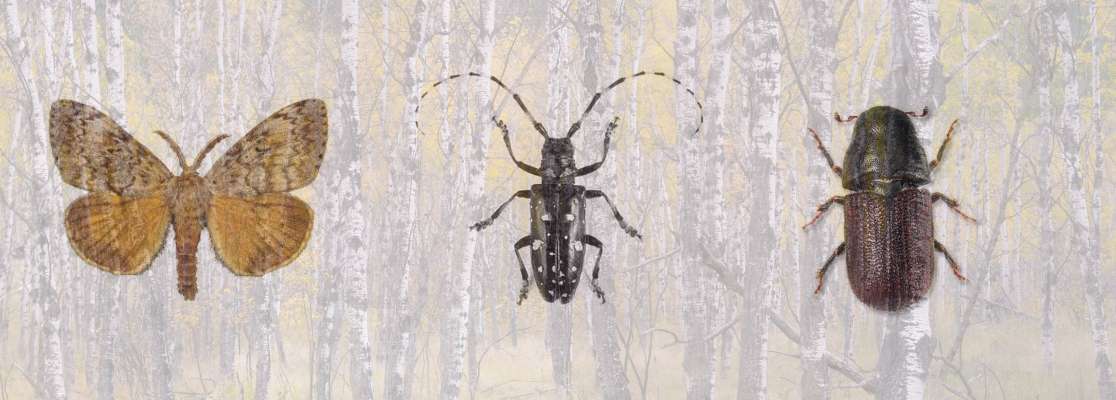
The European gypsy moth is another dangerous invasive species. It is generally found in Eastern Canada and Ontario and was accidentally introduced in Massachusetts in 1869. They get their name because of their ability to transport themselves using various objects.
Gypsy moth larvae have a large appetite. A gypsy moth caterpillar can eat roughly one square meter of leaves, so if you come across them they’re a huge concern. Although gypsy moths have been found on over 500 tree species, they tend to stick to oak and birch trees. Without their leaves, these trees won’t get the food they need and can become vulnerable. Gypsy moths are particularly invasive because they hitch a ride and spread very easily.
The Asian long-horned beetle is another dangerous invasive insect, believed to have been accidentally transported from Asia to Canada via wooden packaging material, like crates and pallets. Once they land in a new habitat they waste no time in spreading and quickly disperse long-distance through wood cargo, such as firewood. When adults lay eggs on their favourite trees (like maple), the hatched larvae tunnel through tissue, eventually killing the tree. This insect, concerningly, has no natural predators in North America and insecticides cannot protect the trees.
Habitats in North America have good reason to be concerned about invasive insects, but they also need to be prepared for invasive diseases. TheDutch elm disease is a fungal elm disease, spread by a bark beetle. Its larvae also tunnel under the tree bark to feed, killing the tree in the process. It is believed that the disease reached Eastern Canada in the 1940s. It has been found on all three species of elm in Canada, and although fungicide treatments are available, they’re costly and aren’t completely effective.
Why You Should Report Any Invasive Species You Encounter
If unfortunately, you happen to find any invasive species (including ones not mentioned above), then you should report them immediately. Any information which you pass to local authorities can help combat their impact. Even if you think you’ve found an old enemy like the emerald ash borer, the information helps minimize their effect.
It’s especially important to report these invasive species since they spread easily, and without intervention, they can have huge impacts on other habitats. If more people are aware of the invasion, they too can help keep an eye out for the pests.
Steve Martin