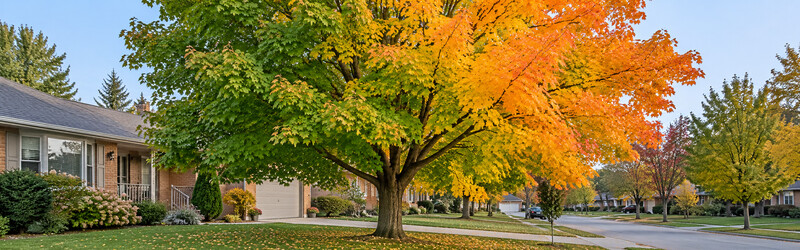
You may expect the whole canopy to change at about the same time each fall. When one side turns yellow, orange, or red while the other side stays green, part of the plant may be receiving less water, nutrients, or structural support. Root stress, branch damage, disease, insects, or different growing conditions can all cause this uneven pattern. You should not assume that early colour means the entire plant is dying. Sunlight, drying wind, artificial light, and natural growth patterns Branches Hanging Over Your Roof or Driveway? Why Fall Is the Right Time to Fix Hazardous Trees09/18/2026 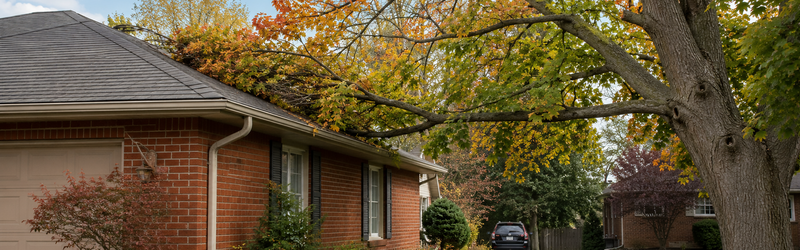
You have a good chance to address hazardous trees during the fall because changing leaves and a thinner canopy can make damage easier to see. Professional pruning or removal can also reduce risks before snow, freezing rain, and strong winter winds arrive. A branch hanging over your roof, driveway, walkway, fence, or vehicle may become more dangerous once winter adds extra weight. Deadwood, cracks, cavities, peeling bark, mushrooms, weak branch unions, and a growing lean may all point to a 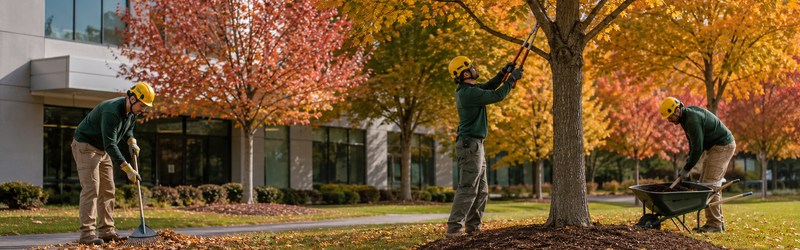
You can prepare your property for winter by arranging a professional inspection, hazardous branch pruning, root-zone care, disease checks, and debris management during the fall. This work can find weak areas before snow, ice, wind, and freezing temperatures place more pressure on them. Warning signs may include dead or hanging limbs, cracks, cavities, peeling bark, mushrooms, weak branch connections, and a thinning canopy. Residential care should focus on risks near roofs, fences, driveways, and outdoor living areas. Commercial maintenance must 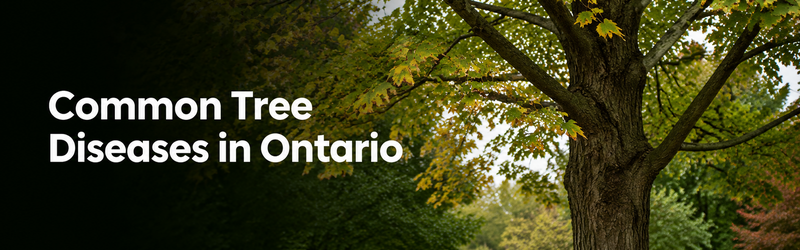
You may spot a serious disease before it spreads by watching for yellow or brown leaves, early leaf drop, dead branches, peeling bark, cracks, black growths, mushrooms, or a thinning canopy. Common problems in Ontario include Dutch elm disease, oak wilt, black knot, apple scab, and anthracnose. Each condition creates a different pattern of damage. One change does not confirm a disease. Drought, insects, root damage, poor soil, and weather stress can cause similar symptoms. A trained professional must examine Is My Tree Dying? 5 Warning Signs08/19/2026 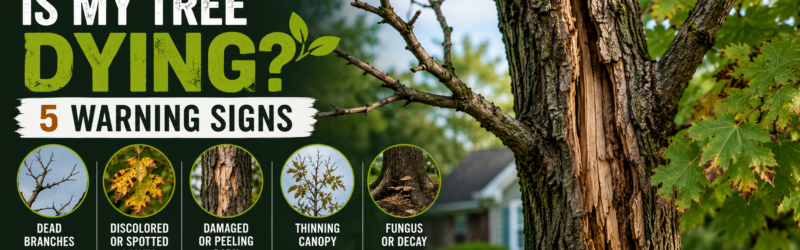
A bad storm can change your yard in a matter of minutes. One heavy branch comes down, a trunk splits, or a whole tree leans in a direction it wasn't leaning before, and suddenly you're standing outside wondering what to do next. In this blog, Martin's Tree Service in Kitchener-Waterloo walks you through exactly when to call for emergency help, when pruning is the right move, and when full removal is the only safe option. The answer depends on 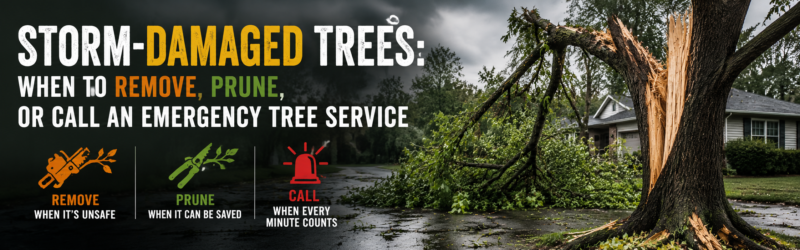
A bad storm can change your yard in a matter of minutes. One heavy branch comes down, a trunk splits, or a whole tree leans in a direction it wasn't leaning before, and suddenly you're standing outside wondering what to do next. In this blog, Martin's Tree Service in Kitchener-Waterloo walks you through exactly when to call for emergency help, when pruning is the right move, and when full removal is the only safe option. The answer depends on 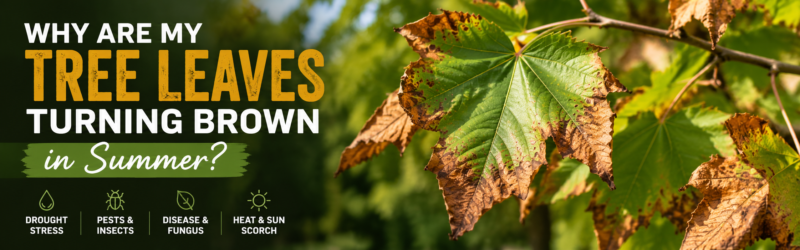
You walk outside on a warm summer day and notice something wrong. The leaves on your tree are turning brown and it's not fall yet. It's a common thing homeowners in Kitchener-Waterloo see every summer, and it's almost always a sign that something needs attention. In this blog, Martin's Tree Service in Kitchener-Waterloo walks you through the most common reasons leaves turn brown in summer and what it means for the health of your trees. Leaves turn brown in 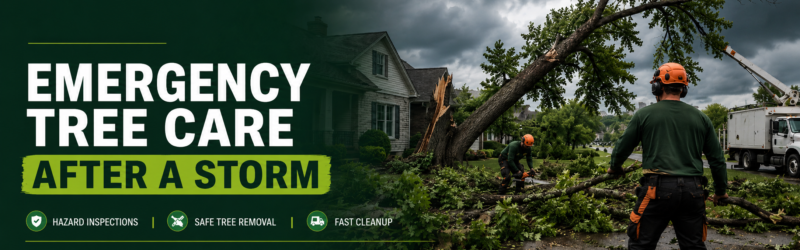
How do you handle tree-related storm damage quickly and safely? You call a professional arborist to immediately assess hidden dangers, bring in specialized rigging equipment to remove hanging branches, and clear heavy debris without risking injury to yourself. Severe weather can turn your yard into a dangerous hazard overnight. High winds, heavy snow, and freezing rain easily snap large limbs or uproot massive trunks. When a storm leaves broken branches hanging over your roof, fast action is absolutely required. Homeowners 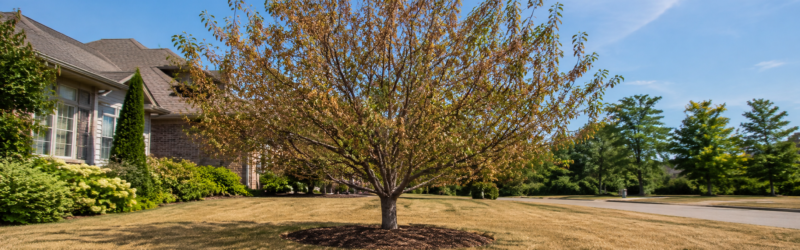
High temperatures and a lack of rain harm your large plants by pulling moisture out of their leaves faster than their roots can absorb it from the ground. This severe dehydration causes leaf scorch, yellowing, and thinning canopies. It also creates dangerous air bubbles inside the wood that block water flow. If the hot weather continues, the entire plant can become weak, making it an easy target for bugs and diseases. Homeowners must understand these risks to prevent permanent yard 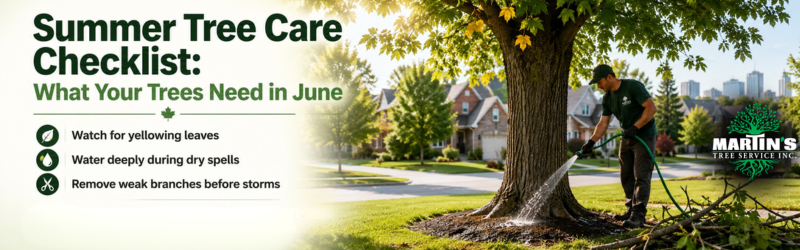
As the weather warms up, you might wonder what your yard needs right now to stay healthy. What your trees need in June is a combination of deep watering, proper mulching, and professional inspections. We have put together a complete summer tree care checklist to help you maintain a beautiful, safe property all season. You will learn exactly how to protect your landscaping from heat stress, hungry pests, and severe thunderstorms. In this blog, we will guide you through the |
YOUR TREES ARE OUR BUSINESS. | 3985 Weimar Line Wellesley, ON N0B2T0 |
©2015-2021 Martin’s Tree Service Inc. All rights reserved. The Martin's Tree Service logo is a trademark of Martin's Tree Service Inc.