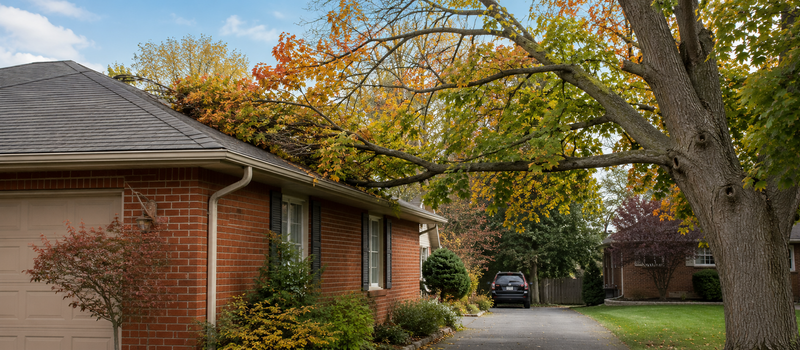
You have a good chance to address hazardous trees during the fall because changing leaves and a thinner canopy can make damage easier to see. Professional pruning or removal can also reduce risks before snow, freezing rain, and strong winter winds arrive. A branch hanging over your roof, driveway, walkway, fence, or vehicle may become more dangerous once winter adds extra weight.
Deadwood, cracks, cavities, peeling bark, mushrooms, weak branch unions, and a growing lean may all point to a problem. Some hazards can be corrected through careful pruning. However, severe trunk decay, root damage, or structural weakness may make removal the safer choice.
You should notice warning signs from the ground, but you should not climb, use a ladder, cut branches, or try to pull down damaged limbs. At Martin’s Tree Service in Kitchener-Waterloo, we can inspect the entire structure and decide what work is needed. In this blog, we explain fall visibility, winter storm risks, professional pruning, removal decisions, and signs that require expert attention.
Why Is Fall a Good Time to Deal With Hazardous Branches?
Fall is a good time to deal with hazardous branches because structural problems become easier to assess as leaves drop. Professional work can then be planned before winter storms place more pressure on weak areas.
Snow, freezing rain, and strong winds can cause damaged limbs to snap. A branch that appears stable during calm weather may fail once it carries the weight of wet snow or ice. Taking action in the fall may prevent a winter emergency.
The right timing still depends on the species, condition, and type of work required. Some pruning may be completed during autumn, while other work may be better during winter dormancy. Our professionals should decide whether pruning, support, monitoring, or removal is appropriate.
Warning Signs That Require a Professional Assessment
One visible problem may be connected to deeper damage in the canopy, trunk, or roots. These warning signs can be noticed from the ground, but they should not be examined up close. Martin’s Tree Service can assess the full condition safely.
- Dead or Hanging Branches: Deadwood may have no leaves, loose bark, or dry and brittle growth. A broken limb may also remain caught among healthy branches. These pieces can fall without much warning, especially during wind or snow. Our team can assess their size, position, and safest removal method.
- Cracks and Split Unions: Deep cracks may form where two large branches meet each other or connect to the trunk. Snow and ice can place more pressure on these weak areas. The split may grow even when it looks small from below. Professionals can decide whether pruning, support, or removal is needed.
- Cavities and Decay: Holes, soft wood, peeling bark, and mushrooms may point to internal decay. The visible opening may not show how much solid wood remains inside. Decay can weaken a trunk or major limb over time. Our team inspects the affected area before recommending care.
- A Growing Lean: Some trees grow at an angle and remain stable for many years. A new or increasing lean may be more concerning, especially when soil rises or roots become exposed near the base. Cracks in the ground can also suggest movement. People should remain away until a professional assesses the area.
- Branches Over Property: Heavy limbs above roofs, driveways, vehicles, fences, and walkways can cause serious damage if they fall. Their location increases the possible impact of a failure. A healthy branch may need clearance work, while a damaged one may require removal. We consider both its condition and what lies below it.
Falling Leaves Improve Structural Visibility
A full summer canopy can hide cracks, deadwood, crossing branches, and weak connections. As leaves change colour and fall, more of the framework becomes visible. This gives professionals a clearer view of areas that may require attention.
Better visibility does not make a ground-level guess reliable. Damage may be high above your property or hidden where a major limb connects to the trunk. Some defects can only be seen from a closer position by someone with the right training and equipment.
Fall visibility also supports better planning. Martin’s Tree Service can decide which branches require work, how equipment can reach them, and where controlled lowering will be needed. This planning is especially important when heavy limbs extend over a roof, driveway, or neighbouring property.
Fall Work Helps Prepare the Property for Winter Storms
Winter weather can place a great deal of pressure on damaged growth. An existing crack or weak connection may become worse during the first major storm. Professional fall care can address selected hazards before harsh conditions arrive.
- Heavy Snow: Wet snow can add considerable weight to long, weak, or poorly attached branches. Existing cracks may widen as that weight builds. A limb can then break over a house, driveway, or outdoor space. Professional pruning can reduce selected risks before the snow arrives.
- Freezing Rain: Ice can form along every branch and twig. This added weight may pull damaged growth toward roofs, utility lines, and parked vehicles. Weak areas that were difficult to notice during summer may begin to bend. Our team identifies which parts may be less able to carry the load.
- Strong Winds: Fall and winter winds can twist branches and place stress on weak unions. Deadwood may also break loose and fall during a storm. Wind can be especially dangerous when a damaged limb has a wide spread. An inspection can find these concerns before they become emergencies.
- Freeze-and-Thaw Cycles: Changing temperatures may affect existing cracks and areas of damaged bark. Water can enter an opening and freeze when temperatures fall. Repeated changes may make the damaged area worse over time. A professional can determine whether the condition affects safety or long-term health.
Cooler Weather Can Support Properly Timed Work
Trees begin to slow their active growth as autumn moves toward dormancy. Cooler conditions may reduce some of the stress linked with hot summer weather. However, this does not mean every species should be pruned at the same time.
Professional timing protects both health and structure. Fresh pruning cuts do not heal like human skin. Instead, the plant forms barriers that help seal damaged tissue away from healthy growth. Proper cuts and suitable timing support this natural process.
Pest and disease activity may be lower during certain cool periods, but the risk varies by species. Martin’s guidance explains that autumn pruning can help clear hazards and improve structure, while some work is better completed during dormancy. Our team identifies the species and chooses a suitable schedule before cutting begins.
When Pruning Can Correct the Hazard
Pruning may reduce danger when the main trunk and roots remain stable. The goal is to remove only the branches creating a health or safety problem. Taking away too much healthy growth can cause stress and affect the natural shape.
- Deadwood Removal: Dead branches no longer support healthy growth and may break during bad weather. Their height and weight can make removal dangerous. Some pieces may also be caught above areas used by people or vehicles. Our team uses suitable equipment to lower them in a controlled way.
- Broken Branch Removal: A partly broken limb may remain trapped in the canopy after a storm. Wind, snow, or ice can cause it to fall later. It may also damage nearby healthy growth as it moves. Professional removal clears the hazard without asking you to stand below it.
- Clearance Pruning: Long branches may scrape roofs, block driveways, or hang too low over walkways. Careful pruning can improve clearance while keeping healthy structure in place. The location of each cut affects future growth. We remove only what is needed to address the concern.
- Structural Pruning: Crossing limbs and weak branch connections may become more dangerous as they grow. Selective cuts can improve balance and reduce pressure on poor unions. This work may also prevent branches from rubbing against each other. The right approach depends on the species, age, and condition.
When Removal May Be the Safer Choice
Pruning cannot repair every structural problem. Severe trunk decay, major root damage, a large split, or a dangerous lean may leave the entire structure unstable. Removing a few branches could reduce weight without correcting the main risk.
Location also affects the decision. A damaged tree near a house, driveway, utility line, public path, or neighbouring property can create a greater danger than one in an open area. Our team considers what could be struck if the structure or a large limb fails.
Martin’s Tree Service recommends removal only after assessing the full condition. Our professionals examine the canopy, trunk, visible roots, surrounding ground, and nearby property. When removal is necessary, we handle controlled cutting, debris cleanup, and stump options without asking homeowners to take part in dangerous work.
Hazardous Trees in Kitchener-Waterloo
Fall in Kitchener-Waterloo can bring changing temperatures, rain, wind, and early frost. Winter may then bring heavy snow, freezing rain, ice, and repeated freeze-and-thaw cycles. Existing cracks and weak branch unions can become more serious under these conditions.
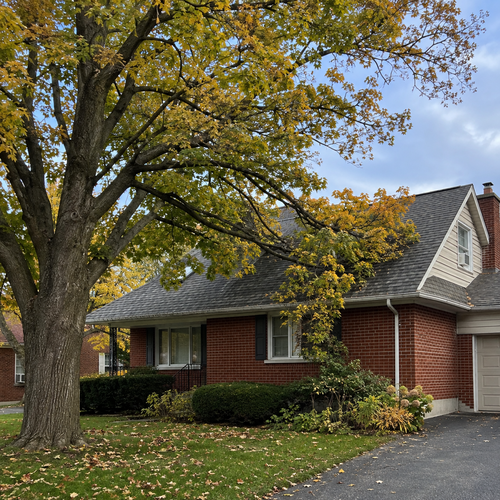
Many local neighbourhoods have mature maples, oaks, elms, evergreens, and other established species. Their branches may extend over homes, narrow driveways, sidewalks, fences, and neighbouring yards. Older growth can offer valuable shade while still requiring regular professional assessment.
Local rules, property boundaries, and utility lines may affect pruning or removal work. Access can also be limited between homes or near busy roads. Martin’s Tree Service considers the location, weather exposure, surrounding property, and work area before service begins.
Hazard Assessment and Professional Care With Martin’s Tree Service
Our team begins by inspecting the full structure and surrounding property. We look for deadwood, cracks, cavities, decay, weak branch unions, root movement, and a growing lean. Roofs, driveways, fences, utility lines, and other possible targets are also included in the assessment.
We then create a plan based on the level of danger and the health of the tree. The work may include professional pruning, hazard reduction, monitoring, structural support, storm cleanup, or removal when necessary. Each recommendation is based on the conditions found at your property.
Martin’s Tree Service completes the cutting, controlled lowering, cleanup, and stump work. Homeowners are not asked to climb, move heavy branches, or manage dangerous debris. Our goal is to protect the property while preserving healthy growth whenever it can be done safely.
Frequently Asked Questions
How can you tell if a branch may fall?
Cracks, missing bark, dead leaves, hanging pieces, decay, and movement near the connection may point to danger. The branch may also bend more than nearby growth during light wind. However, damage can be hidden high in the canopy or inside the wood. A professional assessment is needed to judge the risk safely.
Should a branch hanging over a roof be removed?
Removal may be needed when the branch is dead, damaged, poorly attached, or too close to the building. Healthy growth does not always need to be removed just because it extends over a roof. Professional clearance pruning may be enough in some cases. Martin’s Tree Service can assess its health, position, and possible impact.
Can a dead branch remain attached through winter?
Deadwood may remain attached for months, but this does not make it safe. Snow, ice, and strong winds can cause it to break without warning. Its fall path may reach farther than expected, especially when it is high above the ground. People and vehicles should remain away until a professional completes an inspection.
Is every leaning tree dangerous?
Some specimens develop a natural lean while remaining stable. A new or increasing lean is more concerning, especially when soil is raised or roots are exposed near the base. Trunk cracks and movement in the surrounding ground may also point to instability. Our professionals must inspect the roots, trunk, and surrounding area.
Can hazardous branches be pruned in late fall?
The right timing depends on the species, health, weather, and type of damage. An urgent hazard may require prompt work, while routine pruning may be scheduled during dormancy. Late work is not suitable for every situation. Martin’s Tree Service chooses the proper schedule after inspecting the property.
Who should inspect hazardous trees in Kitchener-Waterloo?
A trained tree-care professional should assess the canopy, branches, trunk, roots, and surrounding targets. This inspection can show whether pruning, support, monitoring, or removal is appropriate. Martin’s Tree Service handles elevated and dangerous work with suitable equipment. You will not need to climb or use cutting tools.
Fix the Hazard Before Winter Adds More Weight
Fall offers better structural visibility and time to prepare before winter storms arrive. Deadwood, hanging branches, cracks, cavities, mushrooms, weak unions, and a growing lean may all point to a serious problem. Snow, freezing rain, ice, and wind can turn existing damage into an urgent safety concern.
Our professional pruning can correct some hazards when the trunk and roots remain stable. Major decay, root movement, severe splits, or a dangerous lean may make removal the safer choice. You should not climb, use a ladder, cut limbs, or pull damaged branches down yourself.
At Martin’s Tree Service in Kitchener-Waterloo, we can inspect growth over roofs, driveways, vehicles, walkways, fences, and neighbouring property. Our team handles professional pruning, controlled removal, cleanup, and stump options when required. We also choose the right work period based on the species and condition.
Contact us and request an estimate to learn more about fixing hazardous trees before winter weather adds more pressure.
Steve Martin