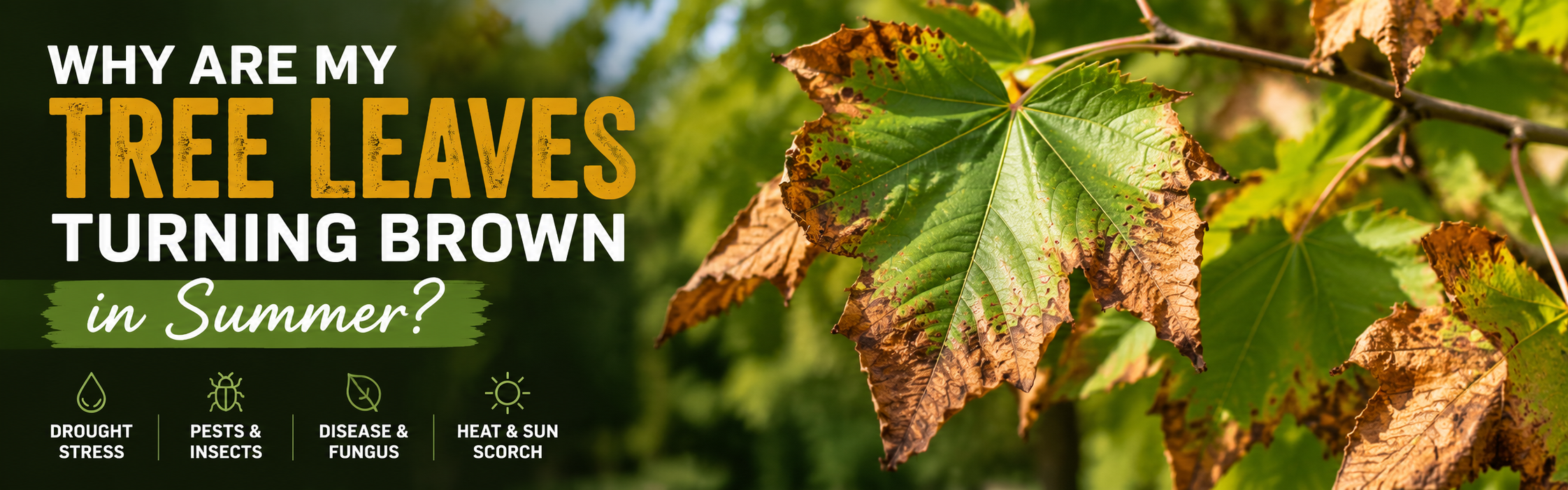
You walk outside on a warm summer day and notice something wrong. The leaves on your tree are turning brown and it’s not fall yet. It’s a common thing homeowners in Kitchener-Waterloo see every summer, and it’s almost always a sign that something needs attention. In this blog, Martin’s Tree Service in Kitchener-Waterloo walks you through the most common reasons leaves turn brown in summer and what it means for the health of your trees.
Leaves turn brown in summer for several reasons. The most common cause is leaf scorch — which happens when the roots can’t pull up water fast enough to keep up with what the leaves are losing on hot days. But heat and drought aren’t the only culprits. Overwatering, root damage, disease, wrong fertiliser use, and chemical exposure can all cause the same browning effect. Knowing which one you’re dealing with makes a big difference in how the problem gets fixed.
You don’t have to figure it out on your own. Brown leaves can be easy to misread, and treating the wrong problem can make things worse. That’s why calling a professional arborist is the smartest first step when you notice something off with your trees.
Does Brown Foliage Mean My Tree Is Dying?
Not always, but it is a warning sign you shouldn’t ignore. Brown leaves in summer often mean the tree is under stress, not that it’s already dead. The difference between a stressed tree and a dying one depends on what’s causing the browning and how long it’s been going on.
A tree that has browning on the tips or edges of its leaves is often dealing with drought stress, heat, or a moisture problem at the root level. That kind of browning is usually treatable if it’s caught early. But if the browning is spreading across whole branches, the bark is cracking, or sections of the tree look completely dead, the situation is more serious and needs a professional assessment right away.
The best way to know for sure is to have an arborist take a look. What you see on the outside of the leaves is often just a symptom of something happening underground or inside the trunk. A trained eye can spot the difference between stress and serious decline and help you figure out the right next step.
Drought and Heat Stress
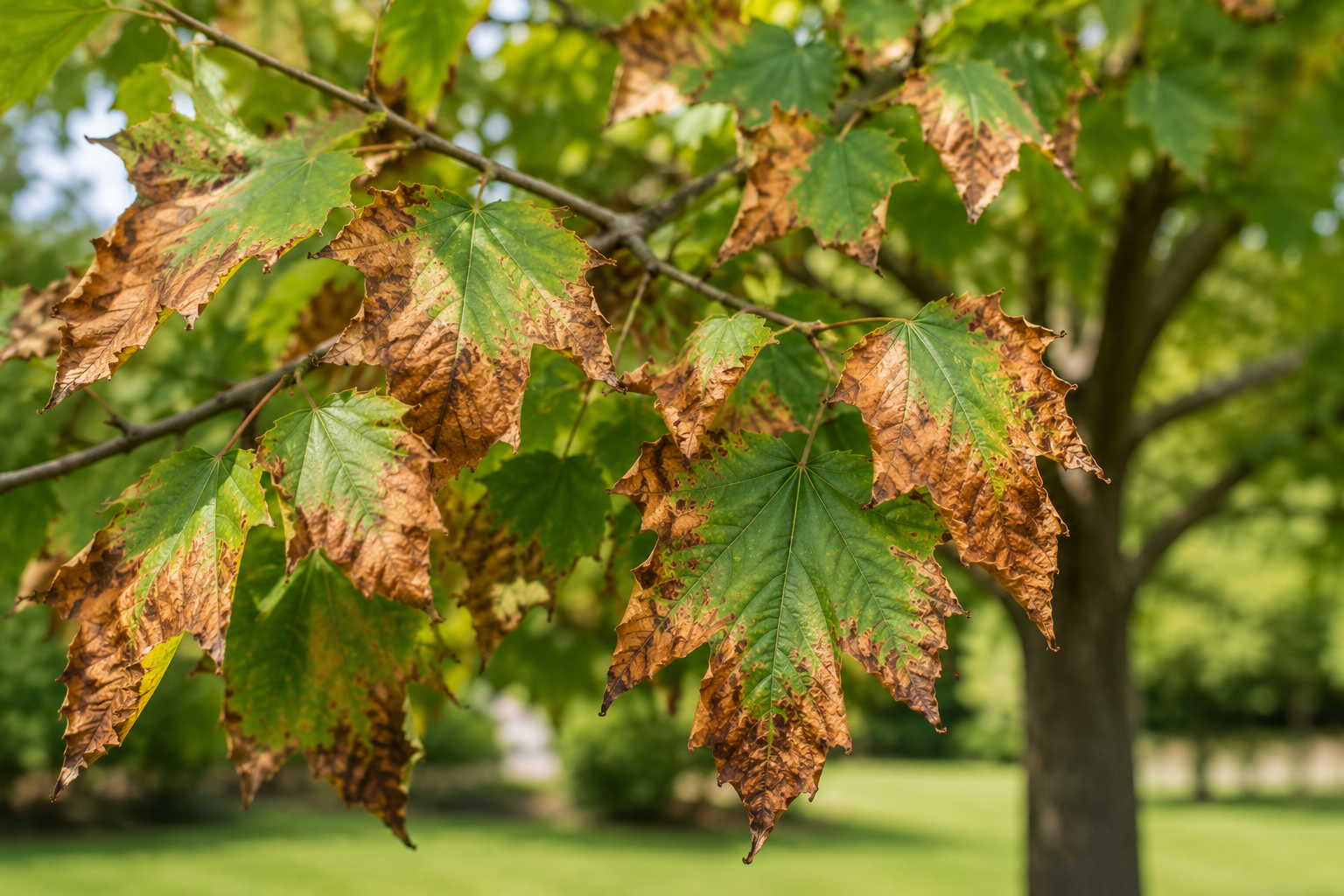
Hot, dry summers put a lot of pressure on trees, especially ones that haven’t had much rain or deep watering to keep their roots hydrated. When the soil dries out, the roots struggle to pull up enough moisture to keep the leaves healthy. The result is scorched, brown, crispy-looking foliage that starts at the leaf edges and works inward.
Kitchener-Waterloo summers can bring long stretches of heat without much rain, and sandy or shallow soils dry out even faster. Younger or recently planted trees feel drought stress more quickly than older, established ones because their root systems haven’t had time to grow deep. But even mature trees show signs of stress during extended dry periods.
Here is what drought and heat stress can look like:
- Brown, Crispy Leaf Edges: The tips and outer edges of leaves turn brown and dry first, as though they’ve been scorched. The centre of the leaf may still look green while the edges are dead. This pattern is one of the clearest signs of moisture stress caused by heat and dry soil.
- Early Leaf Drop: Some trees drop leaves in summer as a way to protect themselves when water is scarce. Losing leaves reduces the amount of moisture the tree has to push out, which helps it survive a dry stretch. If you’re seeing leaves fall before September, heat stress is a likely cause.
- Wilting or Curling Leaves: Leaves may curl inward or droop before turning brown as the tree tries to reduce the surface area losing moisture. This usually shows up on the outer branches first before moving toward the centre of the canopy. It’s an early warning sign that the tree is struggling with water supply.
Overwatering
It might seem like too much water wouldn’t be a problem, but it is. When the soil around a tree stays too wet for too long, the roots can’t get the oxygen they need to work properly. Waterlogged roots start to rot, and once the root system breaks down, the tree can’t pull up nutrients or water even when they’re right there in the soil.
The result looks a lot like drought stress: brown leaves, yellowing foliage, and overall decline. That’s why overwatering is easy to misread. You see the browning, assume the tree needs more water, add more, and make the problem worse without realising it.
Overwatering is common in yards with clay-heavy soil, low spots that collect runoff, or in areas with automatic irrigation systems set too high. If the ground around the base of your tree is consistently soggy, that’s a sign the root zone isn’t draining properly. Our professional assessment can determine whether root rot has set in and what the right course of action is.
Root and Trunk Damage
The roots and trunk are how a tree moves water and nutrients from the ground up to its leaves. When either one gets damaged, that flow gets cut off and the leaves are usually the first place you see the result. Brown patches, wilting, and die-back on one side of the canopy often point to damage below ground or at the base.
Root damage can happen from digging nearby, heavy equipment driving over the root zone, or even from soil compaction over time. Trunk damage from lawnmowers, string trimmers, or construction equipment cuts into the bark and disrupts the layer just underneath that carries nutrients up and down the tree.
Here is how root and trunk damage shows up:
- One-Sided Browning: When damage affects roots or the trunk on one side, the browning in the canopy often mirrors that side. Leaves on the damaged side turn brown while the rest of the tree may still look healthy. This kind of pattern is a strong clue that the problem is structural rather than a disease or watering issue.
- Bark Wounds at the Base: Cuts, scrapes, or missing bark near the base of the trunk are a common source of long-term decline. Each wound interrupts the flow of nutrients and opens the door to infection and rot. Even small repeated nicks from a lawnmower add up to serious damage over several seasons.
- Compacted or Disturbed Soil: Construction, heavy foot traffic, or vehicles driving over the root zone compacts the soil and crushes the fine roots that do most of the water uptake. The damage often shows up slowly – browning increases a little more each season as the root system weakens. A certified arborist can assess root health and recommend steps to reduce further stress.
Bacterial Leaf Scorch
Bacterial leaf scorch is a disease that causes browning to show up in a slow, creeping pattern — usually starting at the back of branches and moving outward toward the tips over time. It tends to get a little worse each year, and it can be easy to mistake for drought stress at first glance because the symptoms look similar.
The disease is spread by insects and moves through the tree’s water system, blocking the flow of moisture to the leaves. Once it’s in a tree, it can’t be fully cured — but it can be managed with the right care to slow its spread and keep the tree as healthy as possible for as long as possible.
If you notice browning that follows a consistent pattern from the inside of the branches outward, and it comes back a little worse each summer, bacterial leaf scorch is worth having checked out. Early diagnosis by a professional arborist gives you more options for managing the disease before it causes serious decline.
Improper Fertilization and Herbicide Damage
Fertilizer is meant to help trees grow, but the wrong kind, the wrong amount, or poor timing can damage the root system and cause leaves to turn brown. Over-fertilizing burns the roots, which shows up quickly as browning and wilting across the canopy. Nutrient deficiencies like low iron or manganese cause a different kind of browning where the leaf veins stay green but the tissue between them turns yellow or brown.
Herbicide drift is another cause that homeowners often don’t suspect. When weed-and-feed products or chemical sprays are applied near a tree, the chemicals can land on the leaves or soak into the root zone and cause foliage damage. It often looks like a sudden burn across the canopy rather than a gradual browning from the tips inward.
Both of these causes are tricky to diagnose without knowing what products were used nearby and when. Our professionals can look at the pattern of the damage and the condition of the soil and roots to figure out whether fertilization issues or chemical exposure are behind the browning you’re seeing.
Tree Problems in Kitchener-Waterloo
Kitchener-Waterloo’s climate creates specific challenges for residential trees that homeowners don’t always expect. Hot, dry stretches in July and August put heat stress on a wide range of species, especially those planted in south-facing yards or near paved surfaces that hold heat. Clay soils in many parts of the region drain slowly, which creates overwatering risk even without irrigation – heavy summer rains can leave roots sitting in water for days.
The region also sees a range of common tree diseases that show up as browning in summer — including fungal infections like anthracnose and bacterial issues that affect popular local species like oaks, maples, and lindens. Identifying which disease is present matters because the treatment approach is different for each one.
Our team at Martin’s Tree Service works throughout Kitchener-Waterloo and knows the local conditions well. We understand which species are most vulnerable in this area, which diseases are most common, and what kinds of soil and drainage problems show up most often in local neighbourhoods. That local knowledge helps us diagnose problems faster and recommend the right care for your specific situation.
The Benefits of Martin’s Tree Service
When you call Martin’s Tree Service, you’re getting a team that has been caring for trees in the Kitchener-Waterloo area for years. We know the local tree species, the common diseases that show up in this region, and the soil and climate conditions that affect tree health season to season. That experience means we can spot problems quickly and give you an honest assessment of what’s going on and what needs to happen next.
Our team is made up of certified arborists who know how to read the signs of stress, disease, and damage that aren’t always obvious to the average homeowner. We look beyond the leaves to check the roots, trunk, and overall structure of the tree before making any recommendations. You get a full picture of what’s happening, not just a quick look and a guess.
We believe in giving homeowners the information they need to make good decisions about their trees. We explain what we find in plain language, walk you through your options, and help you understand what the right course of action is for your specific situation. Whether you need a health assessment, professional pruning, or a removal, our team handles it all safely and professionally.
Frequently Asked Questions
Can a tree recover from brown leaves in summer?
It depends on what’s causing the browning. Stress-related browning from heat or drought can improve if the underlying issue is addressed early enough. Disease or severe root damage is harder to reverse, but professional care can slow the decline and extend the life of the tree in many cases.
Should I water my tree more if the leaves are turning brown?
Not necessarily. Adding more water can help if drought stress is the cause, but it can make things worse if overwatering or root rot is the real problem. The pattern of browning and the condition of the soil around the base can help an arborist determine which situation you’re dealing with.
When should I call an arborist about brown leaves?
Call as soon as you notice it. Brown leaves in summer are always worth having looked at, and catching a problem early gives you more options for saving the tree. Waiting to see if it gets better on its own often means the damage gets worse and harder to treat.
Can a diseased tree infect other ones in my yard?
Yes. Some diseases and pests spread from one tree to others nearby. Bacterial leaf scorch, fungal infections, and certain insects can all move through a yard if one affected tree isn’t properly diagnosed and managed. An arborist can assess the risk and recommend steps to protect the rest of your trees.
Is brown leaf drop in summer always a bad sign?
Not always. Some species drop leaves in summer as a natural response to heat or dry conditions – it’s a survival mechanism, not necessarily a sign of serious disease. However, heavy or sudden leaf drop combined with other symptoms like bark damage or branch die-back is worth having checked by a professional.
Don’t Ignore Brown Leaves: Call Martin’s Tree Service
Brown leaves in summer are your tree’s way of telling you something is wrong. Whether it’s heat stress, a disease, root damage, or a watering problem, the sooner the cause is found, the better the chances of keeping the tree healthy. Waiting too long turns a manageable problem into a much bigger one.
You should never try to diagnose or treat tree health problems on your own. The symptoms of different problems look similar, and treating the wrong cause can cause more harm than good. Calling a certified arborist is the fastest and safest way to get the right answer.
At Martin’s Tree Service in Kitchener-Waterloo, we’re here to help. Our team assesses the health of your trees, identifies what’s causing the problem, and recommends the right professional care to give them the best chance of recovery.
Request an estimate today and let our team take a look before the problem gets any worse.
Steve Martin