

Proper spring care means adding a two-inch layer of organic wood chips, deep watering the root zone weekly, and applying slow-release nutrients before late July. You want your landscape to look beautiful after a long, cold winter. The best way to make sure your plants thrive is by hiring our professionals to handle the heavy lifting. When you rely on our expert team, you get peace of mind knowing your property is getting the exact care it needs.
You might wonder how exactly professionals boost the health of your yard. At Martin’s Tree Service in Waterloo Region, we provide specific treatments to wake up your roots and encourage healthy growth. You will see a major difference when you give your landscape the right hydration and nutrients early in the season. We handle all the hard work so you can simply sit back and enjoy your outdoor space.
In this blog, we will share spring nutrition tips for stronger trees with mulching, watering, and fertilizing. You will learn exactly how our crew sets your property up for success. We will cover how we apply wood chips, deliver deep hydration, and provide the perfect balance of nutrients.
What Trees Should Not Be Mulched?
You should not add heavy mulch to plants growing in overly wet, poorly drained soil. Plants that already struggle with too much moisture can suffer if extra wood chips trap even more water against their roots. You also want to avoid piling wood chips high against the trunks of young saplings, as this causes the bark to rot. Our team always evaluates the soil conditions first. We make sure we only apply ground cover where it will actually help.
You can trust our experts to know exactly which plants need extra protection and which ones do better with bare soil. We look at the drainage patterns in your yard. We also identify the specific types of plants you have. This careful approach prevents moisture issues and keeps your landscape healthy.
You will never have to worry about root rot or pests hiding in damp bark when you hire us. We use the right techniques for every specific plant. This ensures your yard gets the perfect amount of moisture retention without crossing the line into dangerous overwatering.
Spring Mulching Tips
You can depend on our crew to apply the perfect layer of organic ground cover. We follow strict guidelines to ensure your roots stay protected and moist during the warmer months. Here are some of our top spring nutrition tips for stronger trees with mulching, watering, and fertilizing:
- Create a Donut Layer: We spread a two-inch to three-inch layer of organic wood chips around the base of your tree. This layer acts like a cozy blanket, helping to keep the soil moist and cool. The thickness of the mulch also creates a strong barrier against weeds, saving you time and effort later. Plus, the simple donut shape looks clean and helps your tree thrive.
- Keep it Away from the Trunk: It’s important to leave an inch or two of bare space right near the trunk of your tree. If mulch gets too close, it can trap too much moisture, leading to bark disease or rot. By keeping the trunk dry, your tree stays strong and healthy. This small gap also makes it easier to spot any problems with pests or fungus early on.
- Provide Natural Benefits: Over time, organic wood chips break down and become part of the soil. This process feeds your tree with natural nutrients that help it grow stronger. The mulch also protects roots from extreme heat or cold, giving the tree a balanced environment. Using organic matter is one of the easiest and best ways to keep your yard healthy and green.
- Prevent Mower Damage: A proper ring of wood chips acts like a safety zone around your tree. It keeps lawnmowers and weed trimmers far away from delicate trunks. This prevents accidental cuts or scrapes that could harm the tree. With wood chips in place, your tree gets the space it needs to grow without worrying about mechanical damage.
Spring Watering Tips
You will see much better growth when your yard receives proper hydration. We use specialized techniques to make sure water reaches deep into the soil. Here is how we handle hydration:
- Deep, Consistent Hydration: We provide slow, deep hydration once a week to help saturate the entire root zone. This method ensures water reaches where it’s needed most, promoting strong, healthy roots. Deep watering encourages trees and plants to grow deeper roots, making them more resilient to drought conditions. Regular and consistent hydration is key to long-lasting growth and vitality.
- Target the Root Zone: We concentrate moisture under the branch spread area, where the most active roots grow and absorb nutrients. This targeted watering ensures that water is delivered efficiently, without waste. By hydrating the area beneath the canopy, we nourish the part of the soil that directly supports the tree’s health. Proper focus on the root zone helps trees grow stronger and healthier throughout the season.
- Avoid Overwatering: We carefully monitor soil dampness to prevent overwatering, which can cause root rot and other problems. The right balance between hydration and dryness keeps the roots oxygenated and healthy. Our attention to soil moisture ensures that plants get the water they need without creating soggy, unhealthy conditions. Avoiding excess water will help trees thrive and grow effectively.
- Care for Young Saplings: Young saplings receive more frequent watering because their roots are still developing and cannot reach far for water. These frequent drinks give the growing plants a strong start and help them adjust to their new environment. Over time, as the saplings mature and their roots spread deeper, the watering schedule can adjust. Early care for saplings ensures they establish a strong foundation for future growth.
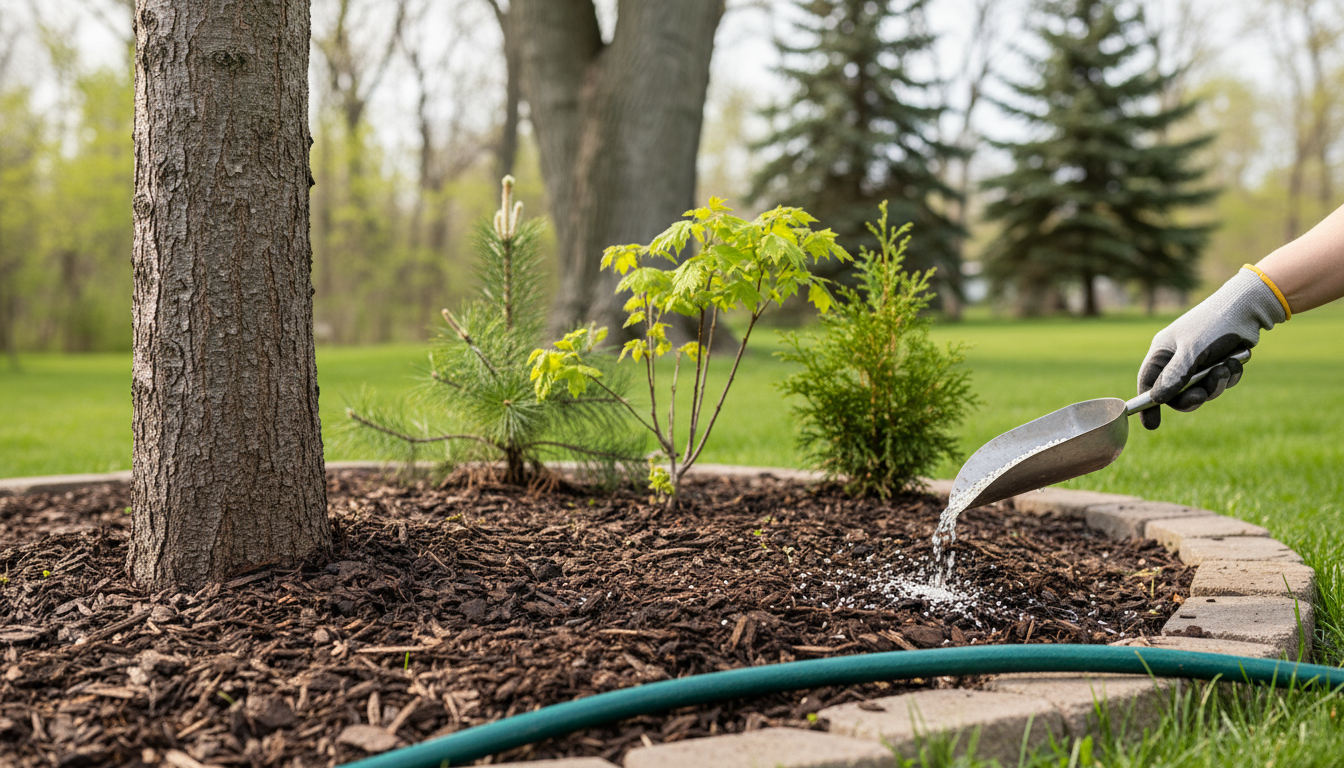
Spring Fertilizing Tips
You get the best results when experts apply the exact nutrients your soil is missing. We use professional-grade products that feed your roots safely and steadily over several months. Here is our approach to feeding your landscape:
- Test the Soil First: Before adding any fertilizer, we always test the soil to understand what nutrients it needs. This helps us decide what type of fertilizer will work best for your landscape. Without testing, you might add the wrong nutrients, which can harm plants instead of helping them. Knowing your soil’s needs is the first step to healthy, thriving plants.
- Use Slow-Release Products: We choose slow-release fertilizers because they feed your plants gradually over time. These formulas make sure plants get a steady supply of nutrients without sudden bursts of growth that can be harmful. They also lower the risk of washing away in the rain, keeping your lawn and garden healthy for longer. This balanced approach is both safe and effective for your plants.
- Choose the Optimal Timing: Timing is very important when it comes to fertilizing. We apply nutrients early in the spring before the summer heat sets in. This gives plants the boost they need to start growing strong and healthy. Adding fertilizer at the right time helps new shoots and roots develop properly, setting your landscape up for a successful season.
- Avoid Over-Fertilizing: Using too much fertilizer can do more harm than good, so we carefully measure everything. Over-fertilizing can burn plant roots and attract pests to your yard. We make sure to use just the right amount to stay safe and keep your plants happy. This way, you get the benefits of fertilizing without any negative side effects.
Removing Debris From the Base
You need a clean yard to prevent diseases from spreading through your soil. We start our spring cleanup by removing all the old, dead leaves and broken twigs from the base of your plants. This clears away the perfect hiding spots for harmful fungi and annoying pests.
You will notice an immediate improvement in how your yard looks once the winter mess is gone. Clearing the ground also allows sunlight and fresh air to reach the soil. This helps the ground warm up faster and encourages new, healthy growth from the roots below.
You save hours of back-breaking work when you let us handle the cleanup. We rake, bag, and haul away all the organic waste. Your property is left spotless and completely ready for our professional feeding and hydration services.
Inspecting and Pruning Branches
You should always have professionals check your canopy for winter damage. Ice and heavy snow often crack branches, leaving them weak and dangerous. Our crew carefully inspects every branch to find dead wood or broken limbs that need to come down.
You help your plants focus their energy on fresh growth when we remove the dead sections. Cutting away damaged wood stops decay from spreading into the main trunk. We use sanitized, razor-sharp tools to make clean cuts that heal quickly and safely.
You also keep your family and property safe when we remove hazardous limbs. Weak branches can easily snap during a mild spring storm. Our pruning process removes these dangers while giving your canopy a beautiful, balanced shape.
The Importance of Using Sanitized Tools
Using sanitized tools is crucial for keeping your plants healthy and preventing the spread of diseases. When tools are not cleaned properly, bacteria and fungi can transfer from one plant to another. This could lead to infections that damage or kill your plants. By cleaning tools before and after use, we make sure your garden stays safe and thriving.
Sanitizing tools is a simple but important process. We start by wiping off any dirt or debris with a clean cloth. Then, we disinfect the tools using a solution like rubbing alcohol or a mixture of bleach and water. These steps remove harmful germs while adding only a few extra minutes to the usual maintenance routine.
Regular cleaning also keeps tools working their best. Dirty or rusty equipment can make uneven cuts that stress your plants and take longer to heal. Sanitized, sharp tools ensure every cut is clean and precise. This helps your plants grow stronger and makes gardening safer for everyone involved.
Local Landscape Care in Kitchener and Waterloo
You know that the weather in the Waterloo Region can be unpredictable. We get heavy snow in the winter and fast, wet thaws in the spring. This local climate means your soil goes through extreme temperature changes. We know exactly how to handle the heavy clay soils common in Kitchener and Waterloo.
You benefit from our local knowledge every time we visit your property. We know which native pests wake up first in our specific region. We also understand local bylaws regarding property maintenance and yard care. Our team always follows the best practices designed specifically for Southern Ontario weather.
You can trust us to time our services perfectly around the local spring frost dates. We wait for the ground to thaw just enough before we apply our slow-release nutrients. This careful timing ensures your yard gets the maximum benefit from our expert services.
Mulching, Watering, and Fertilizing with Martin’s Tree Service
Proper yard care starts with mulching, and our team knows how to do it right. Mulch helps lock in moisture, protect roots, and keep your plants healthy. At Martin’s Tree Service, we use quality mulch to create a clean and polished look while also improving the soil. Plus, it reduces weed growth so your garden can thrive.
Watering is another key part of keeping your yard in top shape. We make sure your trees and plants get the right amount of water without wasting any. Regular watering at the best times of the day helps the roots grow strong and deep. With our expertise, we can give your outdoor space exactly what it needs to stay green and lush.
Fertilizing ensures your lawn, garden, and trees get the nutrients they need to flourish. At Martin’s Tree Service, we use slow-release fertilizers that are perfect for Southern Ontario soils. These carefully chosen nutrients feed your yard over time, giving it strength and resilience. Trust us to provide fertilizing services that promote healthy growth all season long.
Frequently Asked Questions
What happens if I use too much fertilizer?
Applying too many nutrients can burn delicate roots and damage the plant. It causes rapid, weak leaf growth that easily attracts pests. Our experts always measure the exact amount needed to avoid these serious problems.
How often should my yard be watered in early spring?
Most established plants do fine with natural spring rains. However, if the weather is dry, a deep soak once a week is perfect. We check the soil moisture levels to decide exactly what your landscape needs.
Can wood chips attract bugs?
Organic ground cover can attract some insects, but most of them are harmless bugs that actually help break down the wood. We keep the chips away from the main trunk and your house foundation to ensure pests do not cause any damage.
Why is soil testing so important?
Testing tells us exactly what minerals your ground is missing. Without a test, adding nutrients is just guessing. We use soil tests to create a custom feeding plan for your specific property.
Time to Book Your Spring Yard Care!
Proper care in the early months sets your yard up for a beautiful summer. By focusing on spring nutrition for your trees, like mulching, watering, and fertilizing, you build the foundation for a healthy and lush landscape. Taking steps such as clearing debris, testing the soil, and using the right watering techniques ensures that your trees and plants get the support they need to thrive. This process might sound like a lot of work, but it doesn’t have to be.
At Martin’s Tree Service in Kitchener, we make spring yard care simple and stress-free. Our skilled team knows exactly how to give your yard the attention it deserves. You don’t have to worry about mixing chemicals, hauling heavy materials, or tackling tricky yardwork on your own. We handle all the tough tasks safely and efficiently, using the best tools and techniques to enhance your outdoor space.
If you’re ready to enjoy a yard that looks amazing throughout the summer, give us a call today. Request an estimate and see how we can bring your landscaping vision to life. Trust Martin’s Tree Service to take care of your yard, so you can sit back, relax, and enjoy the beauty of your property!
Steve Martin