
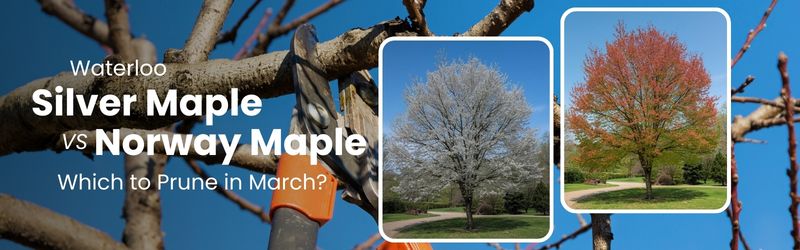
You may feel the pull to book pruning once March arrives. Snow starts to melt, days feel longer, and your yard begins to wake up. Many homeowners assume early spring is the best March moment to tidy things up. When maples are involved, timing matters more than most people realize.
You may also hear mixed advice. Some sources say March is fine. Others warn against it. This confusion often comes up when comparing Waterloo Silver Maple vs. Norway Maple. Both are common across the region, but they respond differently to seasonal timing. That is why professional guidance matters.
At Martin’s Tree Service, we often get questions this time of year. Homeowners want to know which maple can be pruned in March, which should wait, and how this fits alongside spring tree trimming or fruit tree pruning in Cambridge. The answers depend on sap flow, structure, and long-term health.
Below, you will learn how Silver Maple and Norway Maple behave in early spring, why March is a sensitive month, and how professionals decide what work is safe to schedule now versus later.
Why March Is a Tricky Month for Maples
March sits between winter dormancy and active spring growth. Some days feel mild. Nights still drop below freezing. This back-and-forth causes sap to move rapidly inside maple species.
When cuts are made during this period, sap often leaks heavily. This is called “bleeding.” While bleeding does not always kill a healthy specimen, it creates stress and leaves open wounds during wet conditions.
March also brings higher disease risk. Moisture stays longer on fresh cuts. Spores spread more easily. For many maples, this makes March one of the least ideal windows for routine pruning.
How Silver Maple Responds in Early Spring
Silver Maple is fast-growing and flexible. You see it often along streets, near water, and in older neighbourhoods. Its quick growth is also what makes timing more sensitive.
This species begins sap movement early. By March, flow is often strong, especially after warm days followed by cold nights. Cutting during this time usually leads to heavy bleeding.
Silver Maple also forms wide canopies with long, bending limbs. These structures benefit most from pruning during deep winter dormancy or later summer stability. March falls between those safe periods.
For Silver Maple, March pruning is usually avoided unless safety requires it.
How Norway Maple Behaves Differently
Norway Maple grows slower and denser. It has thicker wood and a tighter branch pattern. Because of this, many homeowners assume it handles spring trimming better.
While Norway Maple may bleed slightly less than Silver Maple, it still reacts to March sap movement. The internal pressure is there, even if it is less visible.
Norway Maple also seals wounds more slowly when moisture is high. Early spring cuts can linger open longer than expected. This increases the chance of infection during unpredictable weather.
Professionals usually treat Norway Maple with the same caution in March.
Why Professionals Avoid Routine March Pruning
You may wonder why certified arborists are so careful about March. The reason comes down to long-term structure, not just appearance.
March pruning often leads to:
- Extra sap loss that weakens energy reserves
- Slower wound closure in damp conditions
- Increased attraction for insects and disease
For both Silver Maple and Norway Maple, March is usually a “wait if you can” period. Scheduling work outside this window supports better recovery and long-term stability.
When March Work Is Still Necessary
Not all situations can wait. Safety always comes first. Some conditions require immediate attention regardless of month.
Professionals may recommend March pruning when:
- A broken limb threatens a roof or walkway
- Storm damage has created hanging debris
- Cracks or splits are actively worsening
In these cases, the goal is risk reduction, not shaping or thinning. Work is targeted and controlled to limit stress.
Silver Maple vs. Norway Maple: March Risk Comparison
When deciding which maple carries more March risk, professionals consider structure and sap behaviour.
Silver Maple concerns include:
- Very early sap flow
- Flexible limbs that bleed heavily
- Rapid stress response
Norway Maple concerns include:
- Slower healing during wet periods
- Dense canopy that traps moisture
- Hidden internal pressure
Neither species is ideal for routine March pruning.
Better Timing Windows for Maple Pruning
If March is not ideal, when is the right time?
Professionals typically recommend:
- Late Winter Dormancy: January to February, before sap rises
- Mid to Late Summer: July to August, after full leaf development
These periods allow for clean cuts, faster sealing, and lower disease pressure.
This applies to both Silver Maple and Norway Maple across Waterloo Region.
How This Differs From Fruit Tree Pruning in Cambridge
You may hear about fruit tree pruning in Cambridge happening in early spring and wonder why maples are treated differently.
Fruit-bearing species respond differently to sap movement. Many benefit from early spring shaping to guide growth and production.
Maples are not pruned for yield. Their structure, weight, and sap behaviour require a different schedule. What works for apple or pear does not apply here.
This is why professional timing matters.
Spring Tree Trimming Does Not Mean March Trimming
Spring tree trimming is a broad phrase. It often includes work done in late spring or early summer, not necessarily March.
For maples, true spring trimming usually means waiting until sap flow stabilizes or growth is well underway. March is still a transition period.
Understanding this difference helps homeowners avoid unnecessary stress on valuable landscape features.
How Martin’s Tree Service Approaches March Decisions
At Martin’s Tree Service, March calls are handled carefully. The goal is always safety first, health second, and appearance last.
Work is recommended only when risk outweighs seasonal concerns. Otherwise, homeowners are guided toward safer windows later in the year.
This approach protects long-term canopy health across Waterloo and Cambridge neighbourhoods.
March is not a “yes or no” month. It is a “case by case” month.
Our professionals look at:
- Species type
- Structural condition
- Recent storm history
- Location near homes or roads
This assessment determines whether March work is necessary or best delayed.
What Homeowners Should Watch For in March
While you should never attempt pruning yourself, it helps to know when to call for an assessment.
Watch for these three things:
- Sudden limb drops after thaw
- Cracks revealed as snow melts
- Lean changes near foundations
Early evaluation helps avoid emergency situations later.
Choosing the Right Timing Protects Long-Term Value
Silver Maple and Norway Maple both add shade, privacy, and value. Poor timing can shorten lifespan or create ongoing issues.
Choosing the right pruning window supports:
- Stronger structure
- Faster healing
- Lower disease risk
March is rarely that window for maples.
You do not need to rush just because winter is ending. March is better used for assessments and planning, not heavy pruning. This approach gives you control. It avoids unnecessary stress and keeps your property safer as seasons change.
A Clear Answer for March Pruning
So, which maple should be pruned in March?
In most cases, neither Silver Maple nor Norway Maple is a good candidate for routine March pruning. Safety-based work may still happen, but timing is chosen carefully.
If you are unsure whether March work is needed, professional guidance is the safest next step.
An early assessment helps you:
- Avoid mistakes
- Plan future trimming correctly
- Protect surrounding property
Protecting Your Landscape the Right Way
March feels like a fresh start, but for maples, patience pays off. Choosing the right season supports long-term health and safety.
For homeowners thinking about spring tree trimming or fruit tree pruning in Cambridge, professional timing advice makes all the difference.
Read to plan ahead? If you are unsure whether March pruning is appropriate, a professional assessment can help. Request an estimate with Martin’s Tree Service to learn more about safe seasonal care and long-term planning.
Steve Martin