

You may look at your cedars and hedges in early spring and feel unsure about what they need. Winter leaves behind dry tips, uneven growth, and spots that look tired or thin.
At Martin’s Tree Service, we hear this concern every spring from homeowners who want clean lines and healthy green colour without browning.
You should know that spring shaping without browning is possible when timing, technique, and care work together. Cedar hedge trimming in Guelph requires a careful approach because these plants do not regrow the same way as other shrubs. Spring hedge care is about guiding growth, not forcing it. When shaping is done correctly, cedars stay full, green, and strong throughout the season.
Below are key spring-shaping tips to reduce browning while keeping hedges neat and usable. Each tip reflects how professionals approach cedar hedge trimming so your landscape stays healthy without added stress or damage.
Tip #1: Timing Matters More Than Most Homeowners Realize
You may think any warm spring day is a good time to shape, but timing plays a significant role in how cedars respond. Early spring can be challenging because growth has not yet begun. Cutting too early can leave exposed tips that dry out before new growth appears.
You benefit most when shaping occurs as growth begins, before heat sets in. This window allows fresh green tips to fill in after trimming. It also reduces shock, which is a common cause of browning.
Professional timing focuses on plant readiness, not the calendar. Weather patterns, moisture levels, and overnight temperatures all matter. Spring hedge care works best when shaping supports natural growth instead of pushing it too fast.
Tip #2: Avoid Cutting Into Older Brown Growth
You may not realize that cedars do not grow back from older brown sections. Once those inner areas are exposed, they often stay bare. This is one of the biggest reasons hedges develop permanent thin spots after spring shaping.
Professional shaping stays within the green outer layer. This keeps the hedge full and allows new growth to cover cut areas. Careful depth control is key to preventing long-term damage.
This approach helps:
- Keep Hedges Thick and Even: Cutting only the green growth helps the hedge stay dense from top to bottom. New shoots grow over the trimmed areas instead of leaving gaps. This creates a smooth, healthy look that lasts through the season.
- Prevent Sudden Browning Patches: When cuts go too deep, brown sections are exposed and do not recover. Staying shallow protects the living growth that keeps colour even. This reduces the risk of patchy areas showing up weeks later.
- Support Steady, Predictable Growth: Light, controlled shaping encourages slow and balanced regrowth. The hedge fills in naturally without stress. This makes future trimming easier and helps maintain a consistent shape.
Cedar hedge trimming is less about how much is removed and more about where each cut is placed.
Tip #3: Shape for Sunlight, Not Just Straight Lines
You may prefer a flat, tidy look, but straight sides are not always healthy. Cedars need sunlight to reach the lower sections. When the top is too wide, lower growth becomes shaded and starts to brown.
Our professionals shape hedges so the base is slightly wider than the top. This allows sunlight to reach all levels. The result is fuller growth from top to bottom.
Proper shaping helps:
- Reduce Shaded, Dead Areas: A tapered shape lets light reach the lower branches. This prevents dark, bare patches from forming near the base. Healthy light exposure keeps the hedge full from top to bottom.
- Improve Air Movement: Better airflow helps moisture dry faster after rain. This lowers the risk of stress and disease. Good air movement also supports even growth across the hedge.
- Maintain Colour Throughout the Hedge: When all sections receive light, the green colour stays consistent. Lower growth remains healthy instead of fading. This creates a cleaner and more balanced appearance.
Spring hedge care balances appearance with long-term health. A slightly tapered shape often looks better over time than sharp, flat edges.
Tip #4: Remove Winter Damage Before Shaping Begins
You may notice broken tips or dry sections after winter. These areas can impede healthy growth if left in place. Removing damaged material first creates a clean base for shaping.
Our professionals look for broken or bent branches, areas affected by snow or ice weight, and dry, brittle tips.
Clearing winter damage helps the hedge respond evenly when shaping starts. It also reduces the chance of disease or pest problems later in the season. Cedar hedge trimming often begins with cleanup before any shaping decisions are made.
Tip #5: Light, Even Shaping Reduces Stress
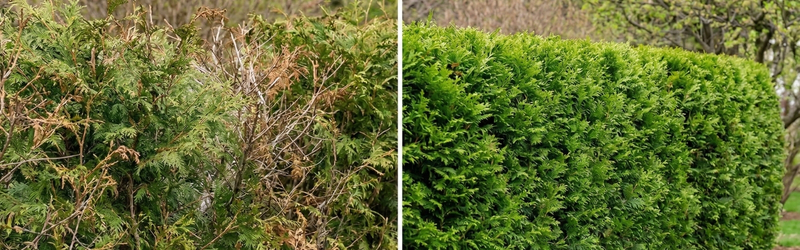
Shaping should make a significant visual change immediately. In reality, lighter cuts done evenly across the hedge reduce stress. Heavy cutting in one area often leads to browning or uneven regrowth.
Professional spring hedge care focuses on balance. Small, consistent adjustments guide growth without shocking the plant. This keeps colour even and growth steady.
This method helps prevent patchy browning, maintain uniform texture, and support healthy recovery after trimming. Cedars respond best when shaping work aligns with their growth rhythm rather than forcing change.
Tip #6: Moisture Levels Affect Browning More Than You Think
You may not connect spring moisture with browning, but water plays a big role. Cedars emerging from winter are often dry, even if the soil appears damp. Cold ground can limit water uptake.
Spring hedge care includes monitoring moisture levels before and after shaping. When plants are already stressed, trimming can exacerbate browning.
Our professional care accounts for:
- Winter Dryness: Cedars can lose moisture during winter winds, even under snow. This hidden dryness makes them sensitive in early spring. Proper care helps them recover before new growth starts.
- Drainage Conditions: Poor drainage can leave roots sitting in cold, wet soil. This slows recovery and increases stress after trimming. Good planning avoids shaping when conditions are working against the hedge.
- Ongoing Spring Rainfall: Too much rain can be just as harmful as too little. Excess water can weaken roots and delay healing. Monitoring rainfall helps balance moisture without overloading the plant.
Healthy moisture levels help fresh cuts recover faster. This support reduces tip burn and keeps new growth strong.
Tip #7: Consistent Maintenance Prevents Overcorrection
You may feel tempted to fix everything in one visit. Over time, that approach often causes more harm than good. Cedars respond better to steady, seasonal care than big changes all at once.
Our professional shaping plans for the entire season. Spring work sets the foundation, while later touch-ups maintain form without stress. This approach protects colour and density.
Cedar hedge trimming works best when shaping is part of an ongoing plan, not a one-time fix.
Tip #8: Weather Awareness Prevents Setbacks
You may not expect a cold snap after shaping, but spring weather can change quickly. Late frost or strong wind can dry out fresh cuts. Timing around weather patterns helps prevent browning.
Professionals watch forecasts closely. They avoid shaping before harsh conditions that could damage exposed growth. This planning protects new tips during vulnerable periods.
Spring hedge care is as much about patience as action. Waiting a few days often leads to better results.
Tip #9: Browning Is Often Delayed, Not Immediate
You may think shaping went wrong weeks after it happened. Browning often appears later, once stress builds up. This delayed response can be confusing.
Professional techniques aim to prevent delayed browning by limiting stress at every step. Proper depth, timing, and balance all reduce long-term issues.
When spring hedge care is done correctly, growth fills in naturally without colour loss. Results improve as the season progresses rather than deteriorating.
Tip #10: Professional Care Protects Long-Term Appearance
You may focus on how hedges look this spring, but shaping also affects future seasons. Poor cuts today can limit growth for years. Professional care protects long-term structure.
This approach supports these three things.
- Even Regrowth Year After Year: Careful shaping encourages new growth to return evenly across the surface. This keeps the hedge looking balanced instead of patchy. Over time, even regrowth makes seasonal maintenance easier.
- Fewer Thin or Bare Areas: Cutting too deeply can expose brown sections that do not regrow. Professional shaping avoids these areas and protects density. This helps maintain privacy and coverage along property lines.
- Strong, Healthy Shape Over Time: A well-shaped hedge grows in a controlled and supported way. Branches are less likely to crowd or weaken each other. This results in a cleaner look that lasts longer between trims.
Trimming is not just about appearance. It is about preserving privacy, value, and function across seasons.
A Healthier Spring Starts with the Right Approach
You want hedges that stay green, full, and clean-looking through spring and summer. Browning is not inevitable when shaping is done with care. Spring hedge care works best when timing, depth, and structure are respected.
If your cedars or hedges need shaping this season, working with professionals helps avoid costly mistakes. At Martin’s Tree Service, we focus on careful, stress-free cedar hedge trimming in Guelph that supports long-term health and appearance.
Request an estimate to learn more about spring hedge care and how proper shaping keeps your landscape looking its best.
Steve Martin