
You may walk past older properties in Cambridge and admire the large, established landscape features that have been growing there for decades. These heritage trees add beauty, shade, and history to your neighbourhood. During winter, however, they face added stress that is not always easy to see from the ground. This is why tree cabling in Cambridge becomes so important during the colder months.
You may not realize that winter is one of the best times to protect these trees. Heavy snow, ice buildup, and freeze-thaw cycles place extra pressure on weak limbs and split trunks. Winter cabling and bracing before thaw helps support these weak areas before spring conditions increase movement and risk. At Martin’s Tree Service in Cambridge, we help homeowners address these concerns early.
You may wonder what winter cabling and bracing involves, when it is needed, and why timing matters so much. Below, we explain how this process works, why winter is the right time, and how it helps protect Cambridge heritage trees before the ground begins to soften.
Why Winter Is the Right Time for Cabling and Bracing
You may assume that most outdoor work should wait until spring, but structural support is different. Winter offers clear advantages when it comes to assessing and reinforcing large trees.
You benefit from better visibility during the winter months. With leaves gone, arborists can clearly see weak branch unions, cracks, and uneven weight distribution. This makes it easier to spot problems that may be hidden during the growing season.
Winter also allows support systems to be installed before the spring thaw increases stress. As snow melts and soil softens, heavy limbs can shift more easily. Installing supports early helps stabilize these areas before that movement begins.
How Snow and Ice Increase Structural Risk
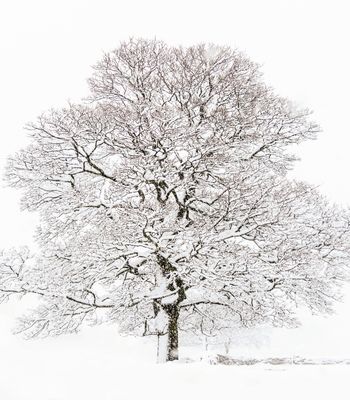
You may not notice the slow changes happening during winter storms. Ice adds weight to branches, while snow accumulation pulls limbs downward for long periods of time.
Over the winter, repeated freeze-thaw cycles can widen existing cracks. Moisture enters small openings, freezes, and expands. This process weakens the structure further with each cycle.
By late winter, even a mild storm can cause failure if weak points are left unsupported. Winter cabling and bracing help reduce this risk before damage occurs.
What Cabling Does for Upper Canopy Support
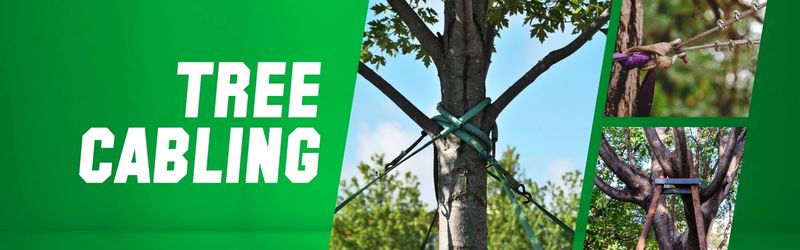
You may hear the term “cabling” and wonder what it actually means. Cabling uses flexible steel cables installed high in the canopy to limit how far branches can move.
These cables do not hold branches rigidly in place. Instead, they reduce excessive motion during wind, snow, or ice events. This allows branches to move naturally while preventing sudden failure.
Cabling helps spread weight across stronger limbs. This reduces strain on weak branch unions and helps preserve the natural shape of the tree.
When Bracing Is Needed for Added Stability
You may also hear about bracing, which serves a different purpose. Bracing uses rigid steel rods installed lower in the structure to support split trunks or heavy limbs.
Bracing is often used when cracks are already present. The rods help hold the structure together and prevent further separation.
This approach adds strength where movement must be limited. It is commonly used in older or high-value trees where preservation is important.
Signs a Tree May Need Support Before Thaw
You may not always notice obvious warning signs, especially in winter. However, certain indicators suggest that cabling or bracing may be needed.
These signs often include:
- Cracks or splits visible in the trunk or major limbs
- Large branches that sag or lean more than they used to
- Areas where two limbs grow tightly together with weak attachment
- Past storm damage that was never reinforced
If you notice these conditions, a winter assessment can help determine whether support is needed before spring.
Why Heritage Trees Require Special Care
You may value heritage trees for more than how they look. In many Cambridge neighbourhoods, these trees are part of the area’s history and help shape the landscape. Their age and size mean they need a different level of care. Here’s a breakdown of why heritage trees require a little more care.
- Age Increases Structural Stress: As heritage trees grow older, natural wear builds up inside the structure. Heavy limbs place more pressure on weak connection points. Winter snow and ice can make this stress worse.
- Large Size Adds Extra Weight: Mature trees carry more weight than younger ones. Wide canopies and long limbs pull outward over time. This increases the risk of splitting or failure without added support.
- Preservation is Often the Goal: Removing a heritage tree is not always the preferred option. Cabling and bracing can help extend its life. This allows the tree to remain part of the property and neighbourhood.
- Property and Community Value Matter: Heritage trees add shade, character, and value to older areas. Protecting them helps maintain the look and feel of the neighbourhood. Proper care supports both safety and long-term preservation.
Why This Work Should Always Be Professional
You should never attempt cabling or bracing on your own because this work affects the living structure of the tree. Improper installation can create wounds that do not heal well and may lead to decay or failure over time. In some cases, using the wrong hardware or placing it incorrectly can shorten the life of the tree instead of protecting it.
Certified arborists understand how trees grow and respond to stress. They know where supports should be placed so the tree stays stable without harming healthy tissue. Professional installation also ensures the system meets safety standards and protects nearby homes, walkways, and people during winter storms.
What Happens During a Winter Assessment
You can expect a winter assessment to focus on structure, balance, and risk. With leaves gone, arborists can clearly see weak branch connections, cracks, and areas under stress. Winter makes it easier to spot problems that may be hidden during the growing season.
Location also matters during an assessment. Trees near homes, driveways, sidewalks, or roads are reviewed more closely because failure could cause damage or injury. Based on what is found, arborists recommend cabling, bracing, monitoring, or a combination of supports to reduce risk before spring.
How Cabling and Bracing Work Together
You may not realize that cabling and bracing are often used together to support different parts of a tree. Cabling is installed higher up to limit how much large limbs move during wind and snow. This helps reduce strain on weak connection points.
Bracing is placed lower where cracks or splits already exist. It holds sections together and prevents further separation. When used together, these systems provide balanced support that allows natural movement while reducing the risk of breakage during winter conditions.
Why Timing Before Thaw Matters
You may think spring is the best time to add support, but waiting can raise the risk. As winter ends, soil and structure begin to change quickly. Acting before thaw helps reduce stress during this unstable period. But why does timing before the thaw matter?
- Frozen Ground Holds Roots in Place: When soil is frozen, the base stays firm and steady. This reduces movement while supports are installed. It creates a stronger starting point before spring changes begin.
- Thawing Soil Increases Movement: As the ground warms, soil becomes soft and wet. This allows more shifting at the base. Movement below sends extra stress upward into weak limbs.
- Spring Weather Adds Pressure: Wind and rain are common during early spring. Without support in place, weakened areas may struggle to handle this added force. Failures are more likely during this time.
- Early Support Reduces Emergency Risk: Installing systems before thaw helps stabilize the structure ahead of seasonal stress. This lowers the chance of sudden damage. Planning early helps avoid urgent problems later.
Long-Term Monitoring Is Still Important
You should know that cabling and bracing are not permanent fixes that can be ignored after installation. These support systems work alongside natural growth, which means conditions change over time. Regular checks help ensure everything continues to function as intended.
As trees grow and move, cables and braces may need small adjustments. Hardware that is left unchecked can become too tight or less effective. Annual inspections help catch these issues early, before they cause stress or damage.
This ongoing care helps extend the life of heritage trees while keeping surrounding areas safe. With proper monitoring, support systems continue to protect valuable trees for many years.
Professional Tree Cabling in Cambridge Starts with Planning
You gain peace of mind by addressing risks early instead of reacting after damage occurs. Winter cabling and bracing before thaw gives our professionals time to fully assess structure, weight, and weak points without pressure from changing spring conditions. This careful planning leads to safer, more effective support.
You also avoid emergency situations later in the season, when storms, melting snow, and soft ground increase the chance of failure. Winter scheduling is often more flexible, which allows work to be done properly rather than rushed. Early action reduces stress for both homeowners and crews.
Planning ahead protects both trees and property. Support systems are installed before the added spring weight and movement occur. This proactive approach helps preserve valuable trees while keeping nearby homes, walkways, and people safe.
Keep Your Heritage Trees Supported This Winter
You do not have to wait for damage to occur. Winter is the ideal time to assess and reinforce valuable trees before the thaw increases stress.
If you are considering tree cabling in Cambridge or need to brace a large tree in winter, our team at Martin’s Tree Service in Cambridge is here to help. We provide professional assessments and long-term solutions designed to protect heritage trees safely.
Request an estimate today to learn more about how winter cabling and bracing can help protect your property before spring arrives.
Steve Martin