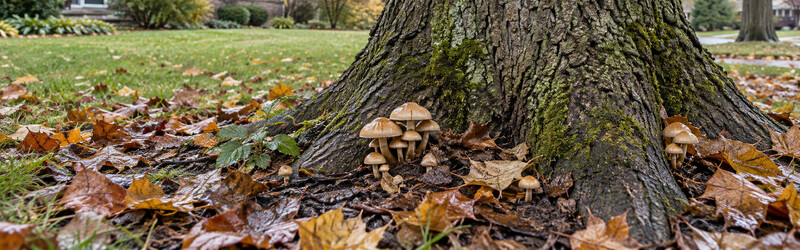
You may notice mushrooms appear around the base of a tree after several cool, wet fall days. They may be feeding on harmless organic material in the soil, but they can also reveal decay in the roots or lower trunk. Their location and connection to the wood matter more than their sudden appearance alone.
You should not assume that every mushroom means the tree is dying. Fungal species, growth pattern, surrounding material, and overall condition all affect what the growth may mean. Cracks, cavities, leaning, root movement, dead branches, or thinning foliage can make the situation more concerning.
At Martin’s Tree Service in Kitchener-Waterloo, we assess the fungal growth together with the roots, trunk, canopy, and surrounding property. You should not touch unknown fungi, dig around the roots, cut into the wood, or rely on an identification app to judge safety. In this blog, we explain what fall fungi may reveal and why a professional assessment matters when hidden decay could affect your property.
Do Mushrooms at the Base Mean a Tree Is Dying?
No, mushrooms at the base do not always mean a tree is dying. Some fungi feed on dead leaves, old mulch, buried wood, or a decaying stump. That growth may not be harming the nearby living structure.
The concern increases when mushrooms or hard fungal growths appear directly from the trunk, root flare, or large roots. This may show that fungi are breaking down wood inside an important support area.
The visible mushroom cannot show how far any decay has spread. A professional must consider its species, location, growing pattern, and the condition of the entire structure.
The Location of the Mushrooms Changes What They May Mean
The exact growing point provides an important clue. Fungi in nearby soil may have a different food source from fungi attached to living wood. Our team traces where the growth begins before judging its possible effect.
- In Soil or Mulch: Some fungi break down dead leaves, wood chips, and other organic material. Mushrooms scattered through nearby soil may not be connected to the roots or trunk. They can still be difficult to identify from appearance alone. You should leave unknown growth undisturbed and contact a professional if you have concerns.
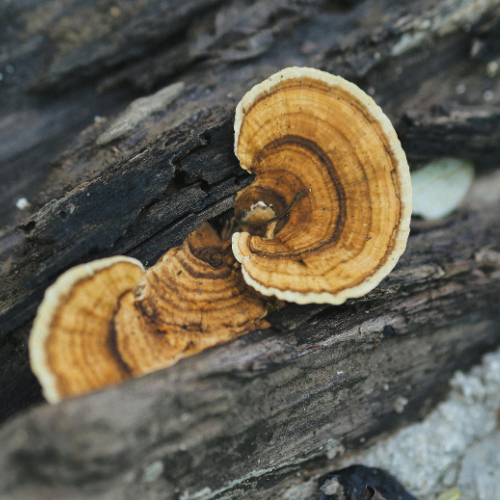
- On the Root Flare or Trunk: The root flare is the wider area where the trunk meets the ground. Mushrooms, conks, or shelf-like growths attached to this area may indicate decay within the wood. The outside can appear firm while the material inside has weakened. This location deserves professional attention.
- Along Major Roots: Growth may emerge from the soil several feet from the trunk along a large root. It could be feeding on a dead, buried root, or it could point to decay in a living support root. The source cannot be confirmed without examining the full structure and surrounding ground. Damaged major roots may affect stability.
University of California guidance identifies mushrooms and conks on woody tissue as possible signs of internal decay. The amount of damage cannot be judged from the fruiting body alone. UC Integrated Pest Management
The Type and Pattern of Growth Provide More Clues
Not every fungus affects wood in the same way. Shape, grouping, location, and timing can help a trained professional narrow the possibilities. Appearance alone cannot show whether a large plant remains structurally sound.
- Shelf-Like Conks: Hard growths may form shelves or brackets on the trunk, lower stem, or exposed roots. These structures can be produced by wood-decay fungi. They may return to the same area during certain seasons. Their presence can show that decay has been active for some time.
- Clusters Around the Base: Groups of mushrooms around the root flare may point to affected roots or lower trunk tissue. Dense clusters can appear quickly after wet weather. The visible caps may last only a short time. Any decay connected to them may remain after they disappear.
- Temporary Lawn Mushrooms: Soft mushrooms spread through grass or mulch may be breaking down buried leaves, wood chips, or old roots. They do not automatically prove that the nearby living structure contains decay. However, similar-looking species may have very different effects. A photograph or phone app cannot provide a complete safety assessment.
You should not taste, break, remove, or handle unknown fungi. Clearing away the visible growth would not remove fungal material inside the soil or wood. Our professional assessment focuses on the source rather than only what appears above ground.
Other Warning Signs Can Reveal a Larger Safety Concern
Fungal growth becomes more concerning when other changes appear nearby. Hidden decay can weaken roots or the lower trunk before the full canopy changes. Several warning signs together may point to a greater risk of branch or structural failure.
- Cracks, Cavities, or Soft Wood: Openings, missing bark, deep cracks, or crumbling material near the base may show that decay has progressed. A cavity may contain less solid supporting wood than the outside suggests. Dark staining or unusual moisture may also appear. You should not press, cut, or reach into a damaged area.
- Leaning or Root Movement: A new lean may indicate that roots have weakened or shifted. Lifted soil, exposed roots, or cracks in the ground can add to the concern. These signs require prompt professional attention. You should stay away from the area if the structure appears unstable.
- Canopy Decline: Dead branches, sparse leaves, small foliage, early colour, and premature leaf drop may show that damaged roots are no longer supporting normal growth. The decline may affect one section before spreading. Canopy symptoms do not reveal the exact location of decay. Our team compares them with conditions at the base.
Martin’s Tree Service advises homeowners to take new leaning, root movement, major cracks, and hanging limbs seriously. These signs may become more dangerous during strong wind, rain, or snow.
A Healthy-Looking Canopy Does Not Rule Out Hidden Decay
A full green canopy can make a tree appear healthy from a distance. However, decay may begin inside the roots or lower trunk before the leaves show clear stress. The outer wood may continue moving water while the inner wood loses strength. This means the structure can weaken even while it still produces normal foliage.
Mushrooms are the visible fruiting bodies of a much larger fungus. The main fungal network may spread through wood or soil where you cannot see it. By the time a conk or mushroom appears, decay may have been present for months or years. Its full reach cannot be judged from the size of the visible growth.
You should not assume that normal leaves make the structure safe. A professional must compare the canopy with the trunk, root flare, major roots, lean, cracks, and cavities. Martin’s Tree Service can assess how much concern the fungal growth creates. This wider review helps determine whether monitoring, professional care, or removal should be considered.
The Location on Your Property Changes the Level of Risk
The same amount of decay can create different levels of risk depending on where the tree stands. One growing in an open area may have fewer targets nearby. Another beside a house, driveway, walkway, play area, or road could cause serious damage if it fails. The direction of any lean also matters.
Size and structure affect the possible impact. A large trunk or heavy branch can reach well beyond the base if it falls. Hidden root decay may affect the stability of the entire structure rather than one visible limb. Wind, rain, snow, and saturated soil can place more pressure on weakened support areas.
You should stay clear if you notice new leaning, lifted soil, root movement, or large cracks. Do not attempt to test the trunk or roots yourself. Our team evaluates the condition together with the surrounding property and possible targets. This helps us recommend the safest response based on the actual level of risk.
Professional Assessment With Martin’s Tree Service
Our team begins by locating where the fungi are growing. We determine whether they connect with soil, mulch, dead material, roots, the root flare, or the trunk. We then assess the surrounding structure rather than relying on mushroom identification alone.
We examine the canopy, branches, trunk, visible roots, lean, cracks, cavities, and nearby property. Homes, vehicles, walkways, and other areas within falling distance can affect how urgently a concern needs attention. This complete assessment helps us judge whether hidden decay may have weakened an important support area.
Our recommendation may involve monitoring, professional care, or removal, depending on what we find. You should not dig around roots, cut into the trunk, remove large fungal growths, or perform your own stability test. We have the training and equipment to assess and complete the required work safely.
Why Fall Fungi Become More Visible in Kitchener-Waterloo
Cool temperatures, autumn rain, damp soil, and fallen organic material can support visible fungal growth. A mushroom may seem to appear overnight, but the fungus may have been present in the soil or wood for much longer. Fall weather simply creates suitable conditions for the fruiting body to emerge.
Properties in Kitchener-Waterloo can contain compacted soil, old stumps, construction injuries, restricted root space, or storm damage. These conditions may create dead or weakened material that fungi can use. Wet areas and poor drainage may also affect root health.
The mushrooms may disappear after a dry period or frost. Their disappearance does not prove that hidden decay is gone. Growth attached to the trunk, root flare, or major roots should be professionally assessed even when it only appears for a short time.
Frequently Asked Questions
Can mushrooms grow near a healthy tree?
Yes, mushrooms can grow near a healthy specimen. Some fungi feed on mulch, dead leaves, buried wood, old roots, or other organic material in the soil. Their presence nearby does not prove that living wood is affected. The exact growing point must be assessed.
Do mushrooms mean the roots are rotten?
Not always. Growth attached to large roots may indicate decay, but mushrooms in nearby soil may be feeding on another source. Their appearance cannot show which roots are affected or how much strength remains. A professional assessment is needed.
Should mushrooms at the base be removed?
Removing the visible mushroom would not remove fungal growth inside the wood or soil. It could also destroy clues that help with identification. Homeowners should leave unknown growth undisturbed. Martin’s Tree Service can assess the area and recommend the appropriate next step.
Can a tree with fungal decay be saved?
That depends on the fungal species, location, amount of decay, remaining sound wood, and overall condition. The location of homes, vehicles, walkways, and other possible targets also affects the risk. Some situations may be monitored or managed. Serious structural decay may require removal.
Can mushrooms return in the same place?
Yes, fruiting bodies may return when temperature and moisture conditions become suitable. Repeat growth can show that the fungus remains active in the same material. The mushrooms may appear for only part of the year. Their seasonal disappearance does not confirm that the concern has ended.
Do Not Judge Structural Safety by a Mushroom Alone
Fall mushrooms may be feeding on harmless organic material, or they may reveal decay in important supporting wood. You cannot tell which situation you have based only on colour, size, or a photograph. The growing location and condition of the entire structure provide the more important clues.
You should take the concern seriously when fungal growth appears directly from the trunk, root flare, or major roots. Cracks, cavities, leaning, root movement, dead branches, or thinning foliage make professional assessment even more important. The visible mushroom may disappear while fungal growth and weakened wood remain hidden.
At Martin’s Tree Service in Kitchener-Waterloo, we assess the fungi, roots, trunk, canopy, and surrounding property before recommending the next step. Our team can determine whether the growth appears connected to harmless organic material or a possible structural concern. You do not need to touch, remove, or identify it yourself. Contact us to schedule a professional assessment or request an estimate to learn more.
Steve Martin