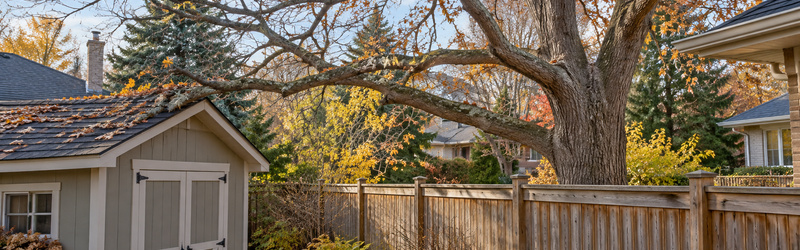
You may feel uneasy when large branches from a neighbour’s property hang over your roof, driveway, or yard. Before winter, speak with your neighbour, confirm ownership and property boundaries, check local requirements, and arrange a professional assessment. Snow, freezing rain, and strong winds can place added pressure on weak or damaged limbs.
You should not assume that every overhanging branch is dangerous or that you have unlimited permission to cut it. The trunk may stand on private property, directly on the boundary, or on municipal land. Poor pruning can also weaken the canopy, damage the entire tree, and create conflict between neighbours.
At Martin’s Tree Service in Kitchener-Waterloo, we can assess the branches and develop a professional pruning plan without asking you to climb or cut anything. We look at branch condition, canopy balance, property lines, nearby structures, and equipment access. In this blog, we explain what you should do before winter when a neighbour’s tree hangs over your yard and how a professional pruning plan can protect both properties.
Can You Cut Overhanging Branches From a Neighbour’s Tree?
Ontario homeowners may sometimes be able to address branches that extend over their property. However, the answer depends on ownership, boundary status, municipal rules, access, and whether the work could harm the entire plant. It is not a simple rule that permits every cut up to the property line.
You should not enter the neighbour’s property without permission or assume the fence marks the legal boundary. Cutting a major limb may affect health, stability, or canopy balance on both sides. The correct pruning point may also be on the neighbour’s side of the line.
A trunk growing directly through a boundary can involve rights and responsibilities for both owners under Ontario law. Municipal specimens and protected plants can have separate rules. The safest approach is to confirm ownership, speak with the neighbour, and arrange a professional assessment before work is planned.
Confirm Ownership, Boundaries, and Local Requirements
The first step is finding out who owns the trunk and whether special rules apply. A branch hanging over your yard does not prove that the whole plant belongs to your neighbour. Ownership should be confirmed before pruning or removal is discussed.
- Trunk on Private Property: The trunk’s location usually helps identify which property contains the tree. However, the visible fence may not mark the exact legal boundary. Old fences can sit inside one lot or follow a path that differs from survey records. Uncertain locations may require property documents or help from a qualified surveyor.
- Trunk on the Boundary: A trunk that grows through the property line may be treated differently from one located fully on one side. Both owners may need to be involved before major pruning or removal is planned. Ontario’s Trees Act contains rules concerning boundary trees, so homeowners should not assume that one person can make every decision alone.
- Municipal or Protected Trees: A trunk near a boulevard or sidewalk may stand on public land even when its branches reach over a private yard. Residents should not prune municipal trees themselves. Waterloo states that residents cannot cut, prune, or remove City-owned trees and must request municipal service instead.
Kitchener also states that it does not become involved in disputes between neighbours about overhanging branches or maintenance. This makes it especially important to confirm ownership, communicate clearly, and obtain suitable professional or legal guidance when needed.
Speak With the Neighbour Before Work Is Planned
Early communication can prevent confusion and help both households make a safer plan. The discussion should focus on the branch condition and winter concerns rather than blame. A professional opinion can give both property owners the same information.
- Share the Concern Clearly: Explain what you have noticed, such as a cracked limb, deadwood, rubbing branches, or growth above a roof or driveway. You can mention why snow, ice, or wind raises concern. Avoid declaring that the entire tree is unsafe without an arborist’s assessment. A visible branch problem may not reflect the condition of the full structure.
- Discuss a Professional Assessment: Suggest having the overhanging growth examined by a trained professional. The branch connection may sit on the neighbour’s property even when most of the limb extends over yours. An assessment can show whether pruning is needed and where the correct cuts would be made. It may also confirm that no immediate work is required.
- Agree on Access and Communication: Professional crews may need access to one or both properties. Equipment placement, branch lowering, cleanup, gates, vehicles, pets, and landscaping should be discussed in advance. Written confirmation can help when access, timing, cost, or the planned scope has been agreed upon. This is especially important when large limbs cannot be handled from only one side.
A friendly discussion does not replace municipal rules or legal requirements. It helps everyone understand the concern and gives the professional team accurate ownership and access information.
Arrange a Professional Winter-Risk Assessment
Branches that appear stable during mild weather may carry more weight after wet snow or freezing rain. Our team examines the complete limb rather than only the section over your yard. The connection, surrounding canopy, and possible landing area all affect the recommendation.
- Branch Condition: Deadwood, cracks, splits, cavities, loose bark, weak unions, and old storm damage may change how a limb handles winter weather. A branch can appear healthy at the end while having a weak connection near the trunk. Our professionals trace it through the canopy and examine related growth. You should not shake or pull a limb to test its strength.
- Weight and Canopy Balance: Removing one large branch can shift weight or change how wind moves through the remaining canopy. A cut made only at the property line may leave a long stub or poor branch connection. Professional pruning must account for balance, healthy growth, and the amount of live canopy being removed. The goal is to address the concern without creating a new weakness.
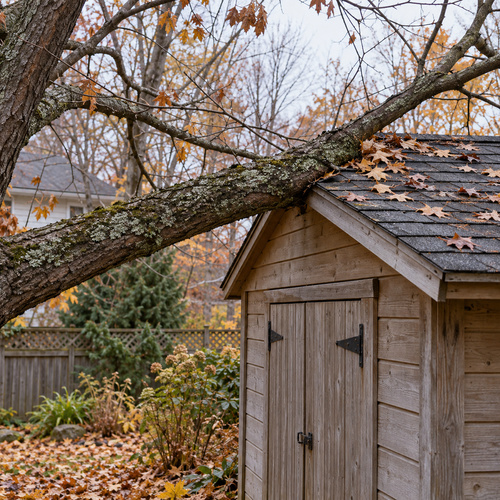
- Nearby Targets: Roofs, sheds, fences, vehicles, driveways, walkways, patios, and play areas may sit beneath the branches. Height and likely fall direction influence the level of concern. A dead limb over an open garden creates a different risk from one above a front entrance. Our team also considers how often the area is used.
You should not climb, use a ladder, stand below damaged wood, or attempt overhead cutting. A cracked or partly attached limb can move without warning.
Create a Pruning Plan That Protects Both Properties
The correct pruning location depends on branch structure, not just the property line. Cutting in the wrong place can leave a weak stub, cause a large wound, or remove too much healthy canopy. Our professionals plan the work around health, safety, ownership, and access.
- Set the Proper Scope: The plan should address only the branches that require attention. This may include deadwood, storm damage, roof clearance, rubbing limbs, or weight reduction. Healthy growth should not be removed without a clear reason. A wider structural problem may require a different recommendation from simple clearance pruning.
- Protect Canopy Health: Every planned cut affects the remaining structure. Branch size, connection, canopy balance, and the amount of live growth being removed must all be considered. Cutting back every limb at the boundary may leave poor wounds or uneven weight. A professional can determine whether the requested clearance is possible without causing serious harm.
- Plan Safe Access and Cleanup: Large branches may require climbing equipment, an aerial lift, ropes, controlled lowering, or access from both yards. Vehicles, patio furniture, people, and pets may need to remain away from the work zone. The neighbour should know when the service will happen and which areas must stay clear. Cleanup and wood removal should also be included in the plan.
Pruning can reduce specific concerns found during an assessment. It cannot guarantee that no branch will ever break during severe weather.
Know When the Situation Needs Faster Attention
Some concerns should not wait for routine scheduling. A large hanging limb, fresh trunk crack, sudden lean, lifted roots, or branch resting against a building may point to an urgent hazard. New damage following a storm also deserves prompt professional attention.
You should keep people, pets, and vehicles away from the possible fall area. Do not move fallen material when other branches remain overhead. A damaged limb may shift as weight changes elsewhere in the canopy.
Branches touching or hanging near electrical wires require extra caution. Stay well away and contact the proper utility provider or emergency service before arranging other work. Never assume that an overhead line is safe because it appears undamaged.
An urgent call does not automatically mean the entire specimen needs removal. A professional must determine whether targeted branch removal, structural pruning, monitoring, or complete removal is appropriate.
Winter Branch Concerns in Kitchener-Waterloo
Kitchener-Waterloo can experience freezing rain, wet snow, strong wind, and changing winter temperatures. Snow and ice can add weight to long limbs and weak unions. Existing cracks or old storm damage may become more important under this added pressure.
Branches above garages, fences, parked vehicles, and narrow side yards are common residential concerns. Closely spaced homes can also make access and controlled branch lowering more difficult. The work may need to be planned from more than one property.
Fall provides a useful window for assessment before the hardest winter conditions arrive. The best pruning time still depends on species, condition, weather, and the purpose of the work. Our team can determine whether service should happen before winter or during another suitable period.
How Martin’s Tree Service Can Help
Our team examines the overhanging limb, its connection, the complete canopy, the trunk, and visible root conditions. We also consider your roof, driveway, walkways, vehicles, utility lines, and neighbouring property. This provides a fuller view than looking only at the section crossing the boundary.
We then determine whether professional pruning can provide clearance or reduce a specific concern. If the condition involves wider decline, major cracks, root problems, or poor stability, we can explain whether further assessment or removal should be considered. Not every overhanging branch requires the same response.
Martin’s Tree Service can plan equipment access and controlled branch removal without asking you or your neighbour to perform dangerous work. Both owners should provide any permissions required for property access. Unclear ownership or legal disputes may still require guidance from the municipality, a surveyor, an insurer, or a legal professional.
Frequently Asked Questions
Who is responsible for an overhanging branch?
Responsibility can depend on ownership, branch condition, notice of a hazard, municipal rules, and the facts surrounding any damage. There is no single answer that fits every property. A professional can assess the physical condition, but legal responsibility may require advice from an insurer or legal professional.
Does a fence show the exact property line?
Not always. A fence may sit inside one property or follow a route that differs from the legal boundary. Survey records may be needed when the trunk or work area is close to the line. You should not approve major work based only on the fence location.
Can branches be cut exactly at the property line?
The proper pruning point is based on branch structure and plant health. Cutting directly at the boundary may leave a poor wound, long stub, or unstable limb. It may also remove too much of one side of the canopy. An arborist should determine whether the requested work can be completed without causing serious damage.
What if the trunk sits directly on the boundary?
A boundary tree may involve rights and responsibilities for both property owners. Consent and professional guidance may be required before significant pruning or removal. If the legal boundary is unclear, survey or legal advice may also be appropriate.
What should happen if a branch touches power lines?
Stay away and contact the utility provider or emergency service. Do not approach the branch, trunk, or surrounding ground. Neither property owner should attempt to cut or move the limb. The utility provider can explain the next safe step.
Make a Winter Plan Before the First Ice Storm
When a neighbour’s tree hangs over your yard, begin by confirming ownership and property boundaries. Check whether the plant is privately owned, shared at the boundary, protected, or located on municipal land. Then speak with your neighbour and arrange a professional assessment before any pruning is planned.
Overhanging growth is not automatically dangerous, but deadwood, cracks, weak unions, and heavy limbs may become more concerning under snow or ice. Work should protect the complete canopy rather than simply cutting everything at the property line. You should never climb, use a ladder, or attempt overhead pruning yourself.
At Martin’s Tree Service in Kitchener-Waterloo, we can assess the branches, surrounding property, access needs, and suitable pruning options. Our team can also explain when a wider structural concern may require monitoring or removal. Arrange a professional assessment and pruning plan before winter conditions make the situation harder to manage. Contact us to request an estimate and learn more about our pruning and removal services.
Steve Martin