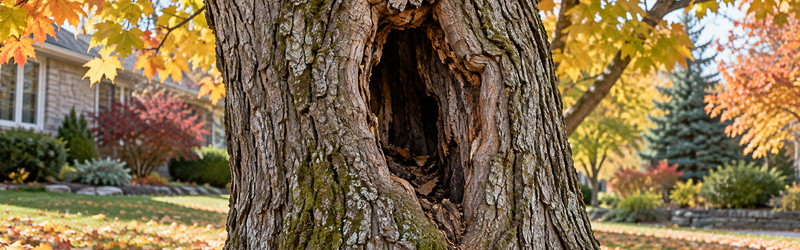
You may see a large cavity in a trunk and assume the entire tree must be removed. However, some hollow specimens can remain healthy and stable when enough sound wood surrounds the opening. The right answer depends on the cavity, remaining structure, canopy health, roots, location, and nearby property.
You also need to separate health from stability. A canopy may keep producing healthy leaves even when internal decay has weakened part of the trunk. An arborist must decide whether professional pruning can reduce the concern or whether removal is the safer choice.
At Martin’s Tree Service in Kitchener-Waterloo, we examine the full structure instead of making a decision from the cavity alone. You should not reach inside the opening, remove soft wood, drill into the trunk, climb, or cut branches yourself. In this blog, we explain how arborists assess a hollow tree and decide whether professional pruning can reduce the concern or removal is the safer choice.
Should a Hollow Tree Be Removed?
No, a hollow tree does not always need to be removed. A cavity may look alarming while healthy wood around it continues supporting the canopy. The level of concern depends on the location and size of the hollow area, remaining sound wood, roots, lean, and overall condition.
A cavity can begin after an old wound, broken branch, weather damage, insect activity, or decay. The opening visible outside may not show the true size or direction of the damage inside. A small opening can connect with a larger hollow area.
Professional pruning may reduce weight or remove damaged branches when the main structure remains strong enough. Removal may be recommended when the trunk, roots, or a major union has lost too much strength. A professional assessment is needed before you assume the specimen can stay or must come down.
The Cavity and Remaining Wood Come First
Arborists begin by examining the opening and the wood around it. A large-looking cavity may still have strong outer wood, while a small opening may hide wider decay. The location of the damage also changes how the trunk carries weight.
- Cavity Location: An opening near the base may affect the structure differently from one on an upper branch. Damage near a major union, root flare, or visible lean can create more concern. Arborists also examine what part of the canopy sits above the hollow area. The same size cavity can create different risks in different locations.
- Remaining Sound Wood: Healthy wood around the cavity helps carry the weight of the trunk and canopy. Arborists consider its thickness, condition, and placement rather than looking only at the opening’s width. Strong wood on one side cannot always make up for major loss on another. Cracks or decay around the remaining shell may further reduce its strength.
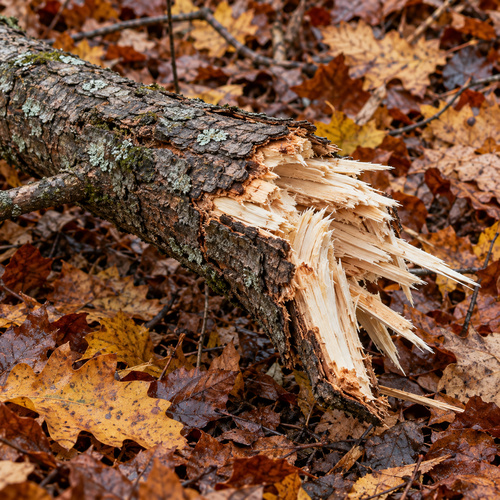
- Signs of Active Decay: Soft wood, loose bark, fungal growth, moisture, cracking, and changes around the opening may point to active decay. Fresh changes can be more important than an old cavity that has remained stable. You should not scrape the opening or pull material from inside it. Disturbing the area can damage living tissue and hide evidence needed for the assessment.
A visual inspection may not provide every answer. When internal conditions remain unclear, an arborist may recommend further professional assessment before choosing pruning, monitoring, or removal.
Overall Health Affects the Chance of Preservation
A cavity is only one part of the decision. Arborists also examine how well the canopy, trunk, and roots are working together. Strong growth cannot erase serious structural weakness, but widespread decline may reduce the chance of preservation.
- Canopy Condition: Healthy leaf growth and new shoots can show that living tissue is still moving water and nutrients. Deadwood, thinning areas, broken limbs, or major sections without growth may point to a wider problem. An uneven canopy may also place more weight on one side. Arborists compare the amount of healthy growth with the weakened structure below it.
- Root and Base Condition: The roots and lower trunk provide support for everything above them. Root damage, soil lifting, decay near the base, construction injury, or a new lean can increase concern. A hollow trunk combined with damaged roots may be less stable than the cavity alone suggests. Our team also checks whether the surrounding soil has changed.
- Pests, Disease, and Past Damage: Insects, fungal disease, old storm damage, poor pruning, and open wounds can affect long-term health. Several concerns occurring together may change the recommendation. An old injury may also have allowed decay to spread slowly through the wood. Arborists review the history of the site when that information is available.
Overall health helps show whether the specimen can continue supporting growth. The final decision must also account for structural strength and the consequences of failure.
Nearby Targets Change the Level of Risk
Risk is based on more than the chance that a branch or trunk could fail. Arborists also consider what might be struck if failure occurs. A hollow specimen in an open field creates a different situation from one beside a home or busy walkway.
- Homes and Other Structures: Roofs, garages, sheds, fences, and neighbouring buildings can sit within the possible fall area. Arborists consider the height, lean, branch spread, and direction of weakness. A large limb over a bedroom or garage creates a different concern from one over open ground. Vehicles and outdoor equipment may also be exposed.
- Walkways and Activity Areas: Driveways, sidewalks, patios, entrances, play areas, and gardens may be used every day. Frequent activity increases the chance that someone could be present if wood falls. Moving around a hanging limb or weakened trunk is not a safe long-term plan. The use of the surrounding space is part of the assessment.
- Roads and Utility Lines: A failure near traffic, public land, or overhead wires can have wider effects. Utility-related work may require help from the proper service provider before arborists can begin. You should stay away from branches touching or hanging near electrical lines. Our team can explain which parties need to be involved.
Distance alone does not give a complete answer. Arborists also study wind exposure, slope, canopy weight, likely failure direction, and how often the surrounding area is used.
Whether Pruning Can Reduce the Concern
Our professional pruning may help when the main trunk and roots retain enough strength. The goal is not to hide the cavity or promise that failure can never occur. It is to address specific branch concerns while preserving healthy growth.
- Removing Dead or Broken Limbs: Deadwood and damaged branches may create hazards that are separate from the hollow area. Our professional removal can reduce the chance of those limbs falling. Clean, planned cuts can also protect healthy branch connections. Taking out damaged wood does not repair the cavity itself.
- Reducing Excess Weight: Selective pruning may reduce weight or wind pressure above a weak area. The amount removed must be carefully planned because excessive pruning can stress the plant or change its balance. Large cuts may also create new wounds. An arborist decides whether limited reduction can provide a useful safety benefit.
- Monitoring Changes: Some hollow specimens may remain in place with scheduled professional reviews. Arborists can watch for new cracks, increased lean, fungal growth, canopy decline, root movement, or changes around the cavity. A stable condition may not need immediate removal. A new warning sign may change the recommendation.
Pruning cannot replace missing internal wood or stop every type of decay. Removal may become the safer option when the main structure cannot support the remaining canopy.
When Removal May Be the Safer Choice
Removal may be recommended when decay has seriously weakened the main trunk, roots, root flare, or an important union. Deep cracks, major canopy decline, a sudden lean, or lifting soil can add to the concern. Several warning signs together may indicate that the structure can no longer be managed through pruning.
The surrounding property also affects the decision. A weakened specimen beside a house, driveway, walkway, road, or play area may create consequences that cannot be reduced enough. Moving one branch may not solve a weakness involving the entire trunk or root system.
Removal is not recommended simply because the trunk is hollow. It follows an assessment showing that pruning, support, or monitoring cannot bring the risk to an acceptable level. Martin’s Tree Service uses the condition and extent of damage to determine when professional pruning may be enough and when full removal is safer.
Hollow Trees in Kitchener-Waterloo
Many mature properties in Kitchener-Waterloo have large trees close to homes, driveways, sidewalks, fences, and neighbouring yards. Limited space makes the location of a cavity especially important. A possible failure may affect more than one part of the property.
Snow, freezing rain, strong winds, and changing winter temperatures can add weight or pressure to weak branches and unions. These conditions do not make every hollow specimen unsafe. However, seasonal weather is part of the risk assessment.
Construction, compacted soil, root cutting, old pruning wounds, and past storms can also affect structural health. A cavity may be only one sign of a larger pattern. Our team reviews the full property instead of looking only at the visible opening.
How Martin’s Tree Service Reaches a Recommendation
Our team examines the cavity, remaining wood, trunk, roots, canopy, branch unions, lean, and visible signs of decay. We also review the surrounding soil and evidence of past storm or construction damage. This creates a fuller picture of health and stability.
We then consider nearby homes, walkways, driveways, vehicles, utility lines, and activity areas. A healthy-looking canopy cannot cancel serious structural weakness. In the same way, one cavity does not prove that removal is necessary.
Our recommendation may include professional pruning, deadwood removal, monitoring, further assessment, or complete removal. You do not need to probe the opening, climb, cut branches, or decide what work is required. We explain what we find and recommend the option that fits the condition and property.
Frequently Asked Questions
Is a hollow tree dangerous?
It can be, but a cavity alone does not prove that the structure is dangerous. Remaining sound wood, roots, canopy condition, cracks, lean, and nearby targets all affect the risk. A professional assessment is needed to determine whether the hollow area can be monitored or requires action.
Can a hollow trunk heal itself?
New wood may grow around an injury and slowly close part of the outside opening. However, missing internal wood does not grow back in the same way. Decay may remain inside even when the outer surface changes. Arborists assess whether enough sound wood remains to support the canopy.
Should a cavity be filled?
Homeowners should not fill, scrape, drill, or clean out a cavity. These actions may damage living tissue, trap moisture, or hide changes that should be monitored. Filling the space does not restore the missing structural wood. Our team should examine the opening in its current condition.
Can pruning make a hollow tree safe?
Professional pruning may reduce certain branch hazards or remove some excess weight when enough structural strength remains. It cannot replace missing wood or guarantee that failure will never occur. The amount and location of pruning must be carefully planned. Some conditions cannot be managed through pruning alone.
How often should a hollow tree be inspected?
The timing depends on the species, condition, location, and findings from the first assessment. Our professional may recommend regular monitoring when the cavity appears stable. New cracks, leaning, root movement, fungal growth, storm damage, or canopy decline may require an earlier review.
Get an Assessment Before Assuming Removal
A hollow trunk does not automatically mean the entire tree is dead or must be removed. Arborists consider the cavity’s location, remaining sound wood, roots, canopy condition, lean, nearby targets, and signs of active decay. They also decide whether professional pruning could reduce the concern enough to preserve it.
You should not reach into the opening, remove soft wood, drill holes, fill the cavity, climb, or cut branches. These actions may cause injury, damage living tissue, or hide signs that an arborist needs to examine. The safest choice is to leave the area unchanged until it has been professionally assessed.
At Martin’s Tree Service in Kitchener-Waterloo, we inspect the full structure and explain whether pruning, monitoring, further assessment, or removal is appropriate. You receive a recommendation based on health, stability, location, and property risk rather than appearance alone. Contact us to schedule a professional assessment before assuming the specimen must come down. Request an estimate to learn more about our pruning and removal services.
Steve Martin