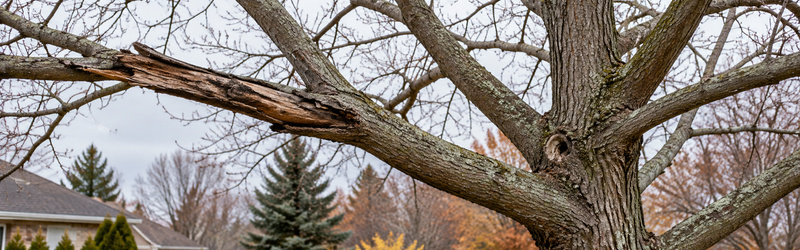
You may notice much more than an empty canopy after the leaves fall. Crossed branches, deadwood, broken limbs, weak unions, trunk cracks, cavities, and uneven growth can become easier to see. Summer foliage often hides these concerns from anyone looking up from the yard.
You can use this clearer view to recognize when professional attention may be needed. However, a visible problem does not tell you how serious it is or whether pruning, support, monitoring, or removal is the right response. The full structure, species, age, location, and overall health must all be considered.
At Martin’s Tree Service in Kitchener-Waterloo, we assess these concerns without asking you to climb, cut branches, or stand below damaged wood. Our team can also determine whether fall or dormant-season pruning is suitable for the species and condition. In this blog, we explain seven tree problems that become easier to spot after leaf drop and how a professional assessment can guide the next step.
What Are the Signs That My Tree Is Unhealthy?
Common warning signs include dead or broken branches, cracks, cavities, weak branch connections, peeling bark, fungal growth, and an uneven canopy. You may also notice areas with less growth, small leaves, or early fall colour before leaf drop. These signs can point to stress, damage, decay, or structural weakness.
One warning sign does not always mean the entire tree is dying. A concern may affect only one branch, while the rest of the canopy remains healthy. Other signs may be connected to root damage, soil problems, disease, or past storms.
A bare canopy is also normal for deciduous species during late fall and winter. The lack of leaves alone does not show poor health. A professional must compare the visible concerns with the species, age, location, and condition before recommending care.
Why Leaf Drop Creates a Clearer View
Leaves can hide the path of branches and the places where they connect with the trunk. Once the foliage falls, our trained professionals can follow individual limbs from their tips to their main unions. This makes the overall structure easier to assess.
The open view may reveal rubbing limbs, narrow unions, old wounds, storm damage, and areas with too much weight on one side. Empty spaces in the canopy may also become more obvious. These patterns can be harder to judge when thick summer growth blocks the view.
Better visibility does not make an inspection safe for a homeowner. Height, heavy limbs, decay, utility lines, nearby buildings, snow, and ice can create serious risks. You should observe possible concerns from a safe location and contact Martin’s Tree Service for an assessment.
Branch Problems Hidden by Summer Foliage
The first group includes limbs that touch, die, or break. Leaves can make these problems blend into the rest of the canopy. Bare branches allow our professionals to trace each limb and inspect how it connects with the larger structure.
1. Crossed or Rubbing Branches: Two branches may grow toward each other and make contact when the wind moves them. Repeated rubbing can wear away bark and create an open wound. The damage may give insects or disease a path into the wood. Our team can determine which branch should remain while protecting the canopy’s shape and health.
2. Deadwood: Dead branches may have missing buds, loose bark, cracks, broken tips, or a different colour and texture. They can be easier to separate from healthy growth once the leaves are gone. Deadwood may break during wind, snow, or ice, especially when it hangs over a driveway, walkway, roof, or yard. Its size, height, and location affect the concern it creates.
3. Broken or Hanging Limbs: A damaged branch may remain partly attached after a storm. Other pieces can become caught in nearby limbs instead of falling to the ground. These hazards may be difficult to see while surrounded by foliage. You should keep away from the area and arrange professional service rather than trying to pull the branch down.
The visible end of a damaged limb may not show the full problem. Our team also examines its union, nearby branches, and the area of the canopy carrying the added weight.
Weak Connections and Trunk Damage
Some important problems develop where major stems meet or where the trunk supports the canopy. Leaf drop provides a clearer line of sight into these areas. A trained assessment is still needed to tell the difference between a normal feature and a weak structure.
4. Weak Branch Unions: A narrow V-shaped union may contain bark trapped between two stems. This trapped bark can prevent a strong wood connection from forming. Large stems carrying separate parts of the canopy may place more pressure on the union as they grow. Wind, snow, and ice can increase that pressure during storms.
5. Cracks and Splits: Cracks may run along the trunk, between large stems, or through a major branch connection. They can develop after storms, sudden temperature changes, impact, or long-term structural stress. Some openings may affect only the outer wood, while others may extend farther inside. Their depth and effect on stability cannot be judged safely from a quick look at ground level.
A weak union or crack does not automatically mean removal is required. Professional pruning, support, monitoring, or removal may be considered based on the full condition and location.
Canopy Shape and Signs of Internal Decline
A bare canopy makes its overall shape and open areas easier to compare. Uneven growth can show where branches were lost or where one side carries more weight. Openings in the trunk and larger limbs may also be easier to see.
6. An Unbalanced Canopy: Growth may be heavy on one side and thin on the other. This pattern can follow poor past pruning, storm damage, limited sunlight, construction work, root stress, or branch decline. An uneven shape may place added force on the trunk or a major union. A professional must determine whether the form creates a structural concern or reflects normal growth around nearby buildings and plants.
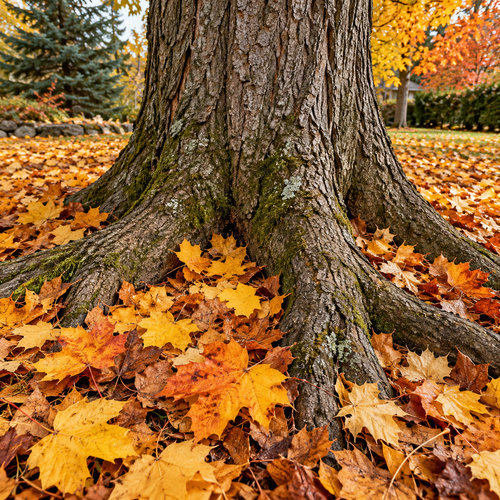
7. Cavities and Decay: Holes, hollow areas, fungal growth, soft wood, and old wounds may point to decay. The small opening visible from outside may not show how far the damaged area extends. Some specimens can remain standing with a cavity, while others may have less sound wood than expected. Specialized assessment may be needed before recommending pruning, monitoring, support, or removal.
An unusual shape or cavity does not provide a complete diagnosis. Our team also considers the remaining sound wood, nearby property, canopy condition, roots, and other warning signs.
Fall and Dormant-Season Care in Kitchener-Waterloo
Fall leaf drop gives arborists a clearer view before the hardest winter weather arrives. Kitchener-Waterloo can experience heavy snow, freezing rain, strong wind, and changing temperatures. These conditions can place extra pressure on weak branches and unions.
Dormant-season pruning may be suitable for many species and situations. The open canopy improves visibility, while reduced leaf cover can make certain cuts easier to plan. However, the best timing depends on the species, health, disease concerns, weather, and reason for pruning.
Work should not begin simply because a branch looks unusual. Removing the wrong limb can affect balance, create a large wound, or reduce healthy growth. Martin’s Tree Service can determine whether care should happen during fall, dormancy, or another season.
What a Professional Assessment Can Determine
Our team traces branch patterns, examines unions, checks visible wounds, and reviews the canopy’s balance. We also look at the trunk, roots, surrounding soil, and signs of past damage. This wider assessment helps us determine whether several warning signs are connected.
The surrounding property is also part of the review. We consider homes, roofs, driveways, walkways, utility lines, play areas, and other places that could be affected by falling wood. A small dead branch above an open field may create a different concern than one hanging above a front entrance.
Our recommendation may include selective pruning, deadwood removal, monitoring, support, or complete removal. Not every visible problem requires the same response. You do not need to climb, use a ladder, cut overhead limbs, or approach hanging wood to help us complete the assessment.
Frequently Asked Questions
Is a bare canopy always a sign of poor health?
No. Losing leaves is a normal seasonal change for deciduous species. The concern comes from deadwood, cracks, cavities, weak unions, broken branches, or other damage that remains visible after normal leaf drop. Our professionals can separate seasonal change from a health or structural problem.
How can dead branches be identified after the leaves fall?
Dead branches may have missing buds, loose bark, broken tips, cracks, or a different colour from nearby living wood. They may also lack the smaller twigs found on healthy limbs. You should not break or cut a branch to test it. Our team can examine the wood and its connection safely.
Are crossed branches dangerous?
Crossed branches are not always an immediate danger, but repeated rubbing can damage their bark. The wound may grow as the limbs become larger and move during wind. The level of concern depends on their size, location, attachment, and effect on the canopy. Professional pruning may prevent further contact when the timing and structure allow it.
Does a trunk cavity mean removal is necessary?
No, a cavity does not automatically mean removal is required. The decision depends on its location, size, surrounding sound wood, overall health, and nearby property. A small outside opening may connect with a larger area of internal decay. A professional assessment is needed before choosing monitoring, pruning, support, or removal.
Is winter a good time for pruning?
Dormant-season pruning can suit many species and goals because the branch structure is easier to see. However, winter is not the correct time for every specimen or concern. Species, health, weather, disease risks, and the purpose of pruning all affect timing. Our team can recommend a suitable service period.
Let Bare Branches Reveal the Next Step
Leaf drop can reveal branch conflicts, deadwood, storm damage, weak unions, cracks, uneven growth, and possible decay. These concerns may have been developing for months or years while hidden behind foliage. The open canopy gives a professional a better view of how the branches connect and carry weight.
You should not climb, use a ladder, cut overhead wood, or pull down a hanging limb to investigate. A visible problem does not show whether pruning, support, monitoring, or removal is the right response. The full structure, species, condition, and surrounding property must guide the decision.
At Martin’s Tree Service in Kitchener-Waterloo, we can inspect bare branches and identify structural or health concerns before winter weather adds more pressure. Our team can also recommend the right timing for professional pruning or removal. Book a fall or dormant-season assessment while the canopy is easy to view. Contact us to request an estimate and learn more about protecting your property.
Steve Martin