Is your ash tree showing signs of trouble? You might notice the leaves are falling off too early, the bark is cracking, or the branches aren’t looking as full as they used to. These could be signs that your tree has been invaded by the Emerald Ash Borer, a small metallic green beetle that can cause serious damage.
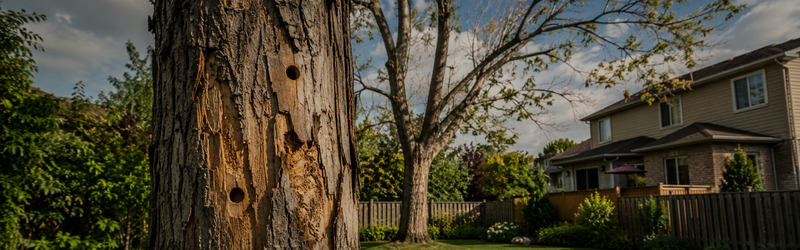
One big clue to watch for is D-shaped holes in the bark; this is where the Emerald Ash Borer enters and exits. You may also notice woodpeckers going after the tree more often since they love to eat these beetles. Unfortunately, once the damage has started, it spreads quickly, putting your tree at serious risk.
You care about your trees; they add beauty to your yard, provide shade, and create a welcoming outdoor space. If you think your ash tree might be in danger, this post is for you. You’ll learn how to spot the early warning signs of an Emerald Ash Borer infestation, why these pests are so destructive, and how our professionals at Martin’s Tree Service in Kitchener-Waterloo can save the day.
Knowing what to look for can help you act fast and protect your trees before it’s too late. Keep reading to find out how to take the right steps to keep your yard healthy and beautiful.
How long can a tree live with an emerald ash borer?
A healthy ash can live for one to three years after an emerald ash borer attacks it. When the beetles first arrive, they lay eggs on the bark. The larvae hatch and burrow inside, cutting off the flow of water and nutrients.
Because the pests work quickly, the health of the wood goes downhill fast. Sometimes, a heavily infested ash will die in just a single year. You might not notice the damage during the first year of the attack.
By the time the physical signs show up, the pest has already done major damage inside the trunk. This is why you must act fast. If you wait, the wood becomes weak, brittle, and very dangerous to have near your home.
What Causes Thinning Leaves and Canopy Dieback?
Canopy dieback is often the very first clue that you have an emerald ash borer problem. You will notice the leaves at the very top of the plant starting to thin out, wilt, or turn yellow long before fall arrives.
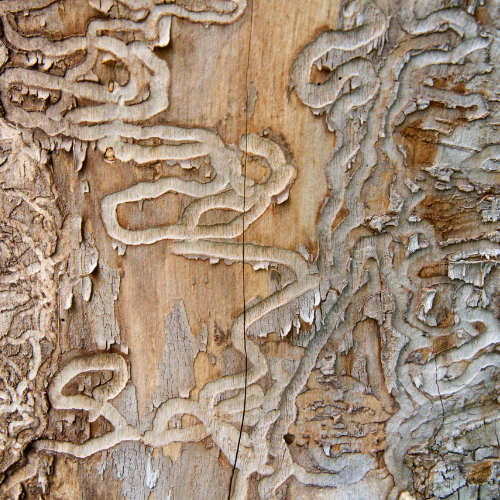
The larvae chew winding tunnels deep under the bark. These tunnels block water and food from reaching the top branches. Without water, those top branches simply starve and die.
- Thinning Canopy: A thinning canopy makes the tree look patchy and weak from above. Fewer leaves grow each year, shrinking the tree’s ability to make food through sunlight. Over time, the canopy becomes sparse, with fewer healthy branches to provide shade. This is one of the earliest signs that the tree is struggling with an insect invasion.
- Small, Pale Leaves: Tiny, pale leaves are another troubling symptom of infestation. These leaves are much lighter than normal and may have irregular shapes or grow unevenly. The lack of nutrients caused by blocked pathways affects how the leaves develop. It also weakens the tree’s ability to create energy and fuels further decline.
- Dead Branches: Dead branches begin to appear in the higher parts of the tree and gradually spread downward. These branches no longer hold leaves and snap easily when touched or in storms. Hanging deadwood is both dangerous and unhealthy, as it increases the risk of injury and further decay. Regular tree inspections can help identify and remove these risks early.
- Visible Bark Damage: The bark often shows visible signs of larvae activity as the infestation spreads. Look for small D-shaped exit holes where adult beetles have emerged. You may also notice vertical splits in the bark or sections peeling away entirely. These are signs of serious internal damage and indicate the need for immediate treatment.
If you spot these early warning signs, do not wait. We can assess the canopy safely and determine the best course of action.
Why Are There D-Shaped Exit Holes in the Bark?
When the adult beetles are fully grown, they chew their way out of the trunk. As they emerge, they leave behind tiny, D-shaped holes that are about 3.5 millimetres wide.
These holes are a massive red flag. They prove that a full life cycle of the pest has already happened right in your yard. Finding these holes can be tough because they are so small.
You usually have to look very closely at the trunk and the larger branches. Sometimes, the holes are high up where you cannot easily see them from the ground. If you find these specific shapes, the infestation is advanced. Our crew knows exactly where to look for these tiny clues safely.
What Do Vertical Bark Splits Mean for Your Yard?
Vertical splits in the bark are another clear sign of distress due to the emerald ash borer. As the larvae feed inside the trunk, the plant tries to heal itself by forming calluses around the feeding tunnels.
This internal swelling forces the outer bark to crack open. These cracks run up and down the trunk. When the bark splits open, it exposes the inner wood to the weather and other diseases.
- Signs of Pest Activity: Cracks and peeling bark provide a closer look at what insects may have caused the damage. The zig-zag pattern of tunnels is a telltale marker of emerald ash borers feeding beneath the surface. These pests destroy the critical inner layers of the tree, disrupting its ability to absorb water and nutrients. Over time, this slows the tree’s growth and restricts its natural ability to heal.
- Impact on Tree Stability: Splits in the bark can turn into more serious problems as the tree begins to break down. The trunk becomes unstable, especially during strong storms or with heavy winds. Broken branches may fall unpredictably, creating hazards in your yard. The overall structure weakens, making it important to assess the tree’s safety regularly.
- Exposure to Further Damage: Open bark splits expose the tree to harmful elements like rain, snow, and direct sunlight. These create the perfect conditions for fungal infections and rot to take hold. With its defences compromised, the inner wood can decay quickly without proper care. This damage also makes the tree more attractive to other pests seeking to inhabit a weakened host.
- Long-Term Effects: Without intervention, the tree’s health continues to decline over time. Calluses forming around the splits may seem like improvement but often mask deeper structural issues. The tree becomes less resistant to weather extremes and may even start dying back from the top down. Early treatment and regular monitoring are key to managing the problem before it’s too late.
If the bark is splitting, the damage is severe. Our team has the right equipment to handle weakened trunks without putting your home at risk.
How Can You Spot Larval Galleries Under the Wood?
Larval galleries are the winding, S-shaped tunnels carved out by the young insects. You will only see these tunnels if the outer bark has split open or peeled away.
The young larvae chew these paths as they eat the inner layer of the wood. The tunnels are usually packed with a fine, brown sawdust called frass. This sawdust is just the waste left behind as they eat.
These tunnels are the main reason the plant dies. They act like a roadblock, stopping the vital flow of sap. Once the sap stops flowing, the wood dries out completely. We do not recommend peeling the bark back yourself, as it can cause things to fall on you.
Why is Epicormic Sprouting a Major Warning Sign?
Epicormic sprouting happens when a stressed plant tries to save its own life. You will see thick bunches of new leafy shoots growing directly out of the lower trunk or the roots.
Because the top branches are dying and starving, the plant desperately pushes out new leaves lower down to capture sunlight. It is a panic response to the emerald ash borer attack. What does epicormic sprouting look like?
- Bushy Growth at the Trunk’s Base: Thick clusters of leaves and shoots often form around the bottom of the tree. These shoots grow directly from the base of the trunk in an effort to gather sunlight. This growth is especially noticeable when the rest of the tree appears sparse. While it might seem like the tree is thriving, this is actually a sign of severe stress.
- Shoots on Unusual Branches: New shoots may emerge on lower, larger branches where leaves normally do not grow. These shoots are a desperate attempt by the tree to generate energy. It is common to see these new shoots in places where the tree typically would not produce much foliage. Their location is a clear signal that something is not right within the tree.
- Larger-Than-Normal Leaves: Emergency shoots frequently produce leaves that are bigger than normal in size. The tree uses these oversized leaves to absorb as much sunlight as possible for energy. These leaves may look healthy, but their unusual size indicates a problem. The need for larger leaves means the tree is struggling to survive.
- Appearance of Overall Health: Vision of new growth may lead to a false sense that the tree is recovering. At first glance, it may seem like the tree is bouncing back from damage or disease. However, this growth pattern actually signals the opposite. It is a clear sign that the tree is nearing the end of its life.
This survival tactic drains the last bit of energy left. When you see these sprouts, it is time to have us come take a look.
What Does Increased Woodpecker Activity Tell You?
Woodpeckers love to eat emerald ash borer larvae. If you see a sudden increase in birds pecking at your ash, pay close attention.
The birds will strip away large outer patches of bark to reach the tasty bugs hiding underneath. This leaves the trunk looking pale and patchy, which experts call “blonding.”
If your yard suddenly sounds like a construction zone with birds hammering away all day, they have found a food source. Blonding is a very reliable sign that the pests are present in large numbers. It is also a sign that the wood is already infested and failing.
The Emerald Ash Borer in Kitchener-Waterloo
The emerald ash borer is a shiny green beetle that causes big problems for ash trees. It came from Asia and has been spreading quickly through North America, including right here in Kitchener-Waterloo. These insects may look small, but they can kill entire forests of ash trees if steps aren’t taken to stop them.
Once the emerald ash borer gets into a tree, it starts eating the inside layers of the bark. This makes it hard for the tree to get the water and nutrients it needs to survive. Over time, the tree becomes weak, and you might notice dead branches or bark falling off.
Our experts in Kitchener-Waterloo are working hard to manage the damage caused by these pests. They use special traps to track the beetles and treat some trees to save them. However, many trees cannot be saved, so residents are encouraged to watch out for signs of infestation and report them.
Tree Removal with Martin’s Tree Service
If your tree is beyond saving, we can help with removal. Dead or damaged trees can be dangerous, especially during storms when they are more likely to fall. Removing them quickly and safely is important to protect your property and loved ones.
Our team at Martin’s Tree Service has the tools and skills to remove trees of all sizes. We carefully plan the job to make sure it is done without causing damage to your home or yard. Our professional crew works efficiently, leaving your space clean and safe after the tree is removed.
After removal, we can also help with stump grinding. Leaving a stump behind can attract pests or become a trip hazard. By removing the stump, your yard will look better and be ready for new landscaping projects.
Frequently Asked Questions
Can an infected ash recover on its own?
No, it cannot recover without help. Once the emerald ash borer infestation begins, the pests burrow into the tree and continue to feed on its inner layers. This cuts off the flow of nutrients and water, causing the tree to weaken and eventually die. Without treatment, the tree cannot stop the damage or heal itself.
Does the cold Canadian winter kill the emerald ash borer?
No, these pests can survive the cold winters we have. They stay protected deep under the tree bark, where the freezing temperatures cannot reach them easily. While extremely cold conditions might kill some of the population, most of the pests will survive and continue their life cycle. This makes them especially dangerous for trees in colder climates.
Can I chop the dead wood into firewood?
You should never move the infected firewood to a new location. Even if the tree is dead, the pests living inside it can travel with the wood. By moving the firewood, you risk spreading the infestation to areas with healthy trees. Always check with local guidelines for proper disposal of infested ash trees to help stop the spread.
How do I know if the bug is in my specific area?
The emerald ash borer is heavily active across Southern Ontario. If you live in regions like Kitchener, Waterloo, or nearby towns, your trees are at serious risk. Signs of the bug include D-shaped exit holes in the bark and thinning tree crowns. Check with local forest management or pest control services to confirm its presence in your area.
Protecting Your Property in Kitchener-Waterloo
Living in Southern Ontario means our local environment is under heavy threat from this invasive pest. The local climate allows the emerald ash borer to thrive. In our region, we see the devastating effects of this pest every single day.
Dealing with the emerald ash borer is stressful, but you do not have to handle it alone. We have looked at the main signs of an attack, from canopy dieback and D-shaped holes to splitting bark and heavy woodpecker damage. Catching these signs early helps you understand the danger, but taking action is the only way to keep your property safe. The longer you wait, the more brittle and dangerous the wood becomes.
If you are worried about the safety of your yard, it is time to bring in the experts at Martin’s Tree Service in Kitchener-Waterloo. We handle the heavy lifting and the dangerous removals so you do not have to worry. Reach out to request an estimate today, and let us help you restore safety to your beautiful property.
Steve Martin