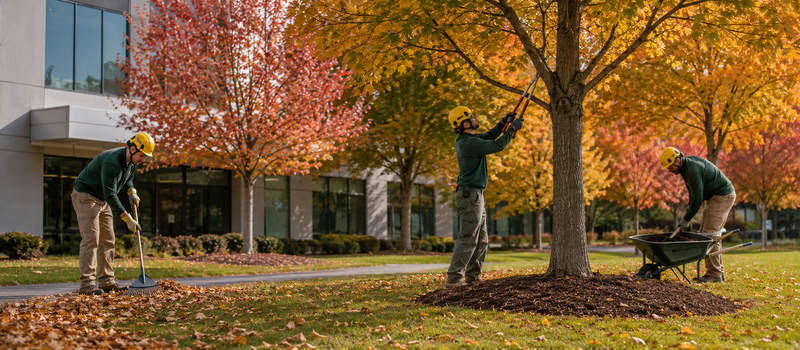
You can prepare your property for winter by arranging a professional inspection, hazardous branch pruning, root-zone care, disease checks, and debris management during the fall. This work can find weak areas before snow, ice, wind, and freezing temperatures place more pressure on them.
Warning signs may include dead or hanging limbs, cracks, cavities, peeling bark, mushrooms, weak branch connections, and a thinning canopy. Residential care should focus on risks near roofs, fences, driveways, and outdoor living areas. Commercial maintenance must also protect entrances, parking lots, signs, vehicles, and busy public spaces.
You can observe concerns from the ground, but you should not climb, prune, apply products, or handle diseased material. Martin’s Tree Service in Kitchener-Waterloo can inspect the property and complete the needed work. In this blog, we cover inspections, pruning, root care, disease signs, residential and commercial priorities, and winter risk planning.
What Tree Maintenance Should Be Done in the Fall?
Fall tree maintenance should include a professional inspection, the removal of dangerous or dead branches, root-zone checks, winter hydration planning, disease assessment, and proper debris cleanup. The exact care will depend on the species, age, health, and location of each plant.
Not every specimen should be pruned at the same time. Poor timing or incorrect cuts can cause stress, damage healthy growth, or leave an opening for decay. Our trained professionals can decide which work should happen during autumn and which tasks should wait until winter dormancy.
Martin’s Tree Service can create a plan for your property before harsh weather begins. You will not need to climb or use cutting equipment.
A Professional Fall Property Inspection
A professional inspection examines the entire structure instead of focusing on one visible branch. Our team studies the canopy, major limbs, trunk, bark, roots, and nearby property. Several clues help us decide which concerns need attention first.
- Canopy Condition: Deadwood, broken limbs, thin areas, and uneven growth may point to health or structural problems. We compare the affected area with the rest of the canopy.
- Branch Structure: Split, crossing, hanging, or weakly attached limbs may fail under snow and ice. Their size and height can make them hard to judge from the ground.
- Trunk and Bark: Cavities, cracks, peeling bark, soft areas, and mushrooms may suggest decay. The visible damage may not show how much solid wood remains.
- Root Area: Raised soil, exposed roots, fungal growth, or movement around the base may signal instability. We also look for drainage, construction, and soil concerns.
Professional Pruning Before Winter
Dead, broken, and weak branches may fail when winter snow and ice add extra weight. Strong winds can place more pressure on cracks and poor branch connections. Our professional pruning can reduce these risks before storms arrive.
The timing and method of each cut matter. Different species respond to pruning in different ways, and removing too much healthy growth can cause stress. According to Martin’s seasonal pruning guidance, autumn can support some structural work, but each plant must be assessed before cutting begins. Martin’s Tree Service explains how pruning needs change by season.
Large or raised limbs also require proper equipment and a controlled work area. Our team handles the cutting, lowering, and debris removal while you remain safely away.
Root-Zone Care and Disease Checks
Roots need support before the ground freezes, even as the canopy enters dormancy. Dry soil, poor drainage, deep mulch, exposed roots, and compacted ground can affect winter health. Disease signs may also become easier to notice as leaves change and fall.
- Soil Moisture: Fall rain may not reach deep roots after a hot or dry summer. Soil near the surface can appear wet while deeper areas remain dry. Our team assesses the root zone and determines whether professional watering support is needed before the ground freezes.
- Mulch Condition: A suitable mulch layer can reduce water loss and protect roots from sudden temperature changes. However, mulch piled against the trunk may trap moisture and damage the bark. We check its depth and placement before recommending any changes.
- Compacted Ground: Foot traffic, parked vehicles, and construction equipment can press air from the soil. This makes it harder for roots to receive the water, air, and nutrients they need. Compaction is often a concern around commercial sites, driveways, and busy yards.
- Disease Clues: Early leaf loss, dark growths, small holes, dead limbs, and damaged bark may point to disease or pests. Drought and root damage can cause some of the same warning signs. Our team identifies the likely cause before recommending professional care.
Fall Priorities Around Residential Properties
Home maintenance should protect your family, visitors, and the structures around your yard. A damaged limb may reach much farther than expected if it breaks during a winter storm. Our inspection considers plant health and everything that could be struck.
- Roofs and Chimneys: Long or damaged branches may scrape roofing, fill gutters with debris, or break over a chimney. Snow and ice can place added weight on weak growth. We check the condition and clearance of each limb before planning professional pruning.
- Driveways and Vehicles: Weak branches above parking areas can threaten vehicles during a winter storm. Cracks high in the canopy may be difficult to see from the ground. Our team checks for deadwood, splits, and weak connections that may fail under added weight.
- Walkways and Doors: Hanging or low limbs may reduce safe access to doors, stairs, patios, and paths. A branch could also fall and become hidden beneath fresh snow. We identify concerns around busy areas and decide which work should receive priority.
- Fences and Outdoor Spaces: Sheds, pools, play areas, fences, and patios may sit below large branches. A falling limb could damage these features or create a safety concern for your family. Our pruning plan considers both plant health and the location of nearby property.
Fall Priorities Around Commercial Properties
Commercial sites must account for customers, staff, tenants, delivery workers, and vehicles. One falling limb can block access, damage property, or interrupt normal business. Regular professional assessments help managers address hazards before winter arrives.
- Parking Areas: Large branches may extend over customer and employee vehicles. Traffic, parked cars, and snow-clearing equipment can also compact the soil around roots. We assess overhead hazards and ground conditions throughout the parking area.
- Entrances and Sidewalks: Low, broken, or hanging limbs may reduce safe access around doors, ramps, and public walkways. Snow and ice can make these busy areas harder to use. Our team identifies concerns that could affect customers, workers, and visitors.
- Signs, Lights, and Cameras: Dense growth may block signs, lighting, or security cameras. Poor visibility can make it harder for drivers and pedestrians to move around the property safely. Our professional pruning can improve clearance while keeping healthy branches in place.
- Delivery Areas: Trucks and service vehicles need enough height and width near loading zones. Repeated contact can damage both the vehicle and nearby branches. We inspect travel routes and identify growth that may affect safe deliveries.
- Public Spaces: Patios, courtyards, playgrounds, and gathering areas place more people beneath the canopy. Deadwood, cracks, and weak branch connections can create added risk in these locations. Our team may give these high-traffic spaces early attention in the maintenance plan.
When Pruning Is Not Enough
Pruning cannot correct every health or structural concern. Severe trunk decay, damaged roots, a large split, or a growing lean may leave the entire structure unstable. Removing a few branches would not solve the deeper problem.
Our team considers the species, condition, location, and nearby targets before making a recommendation. Professional monitoring or support may be possible when enough healthy wood remains. The goal is to preserve safe, healthy growth whenever practical.
Removal may be necessary when failure is likely or recovery is not possible. Martin’s Tree Service handles controlled cutting, cleanup, and stump options without asking owners or property staff to take part in hazardous work.
Fall Tree Maintenance in Kitchener-Waterloo
Kitchener-Waterloo can experience quick temperature changes, strong winds, rain, and early frost during autumn. These conditions are followed by snow, freezing rain, and ice. Existing cracks and weak branch connections may become more serious under that added winter weight.
Local homes may have mature maples, oaks, elms, evergreens, and ornamental varieties near roofs and driveways. Commercial sites often have landscaped entrances, parking lots, pedestrian routes, and older plantings. Each property needs a plan based on its layout and use.
Rules or permits may apply to some removal projects. Utility lines and shared property boundaries can also affect the work. Our team reviews these conditions before service begins.
Fall Maintenance with Martin’s Tree Service
At Martin’s Tree Service, we begin with a complete property inspection. Our team examines the canopy, branches, trunk, bark, roots, nearby targets, and visible health concerns. This gives you a clear list of work before winter.
We then set priorities based on safety and plant health. Our services may include professional pruning, hazard reduction, disease assessment, storm preparation, cleanup, or removal when required. Martin’s also notes that removing weak growth can reduce the chance of winter breakage. Read its seasonal care guidance.
We handle the work without asking homeowners, employees, or property managers to climb or cut. Our team uses suitable equipment and maintains controlled work areas throughout the service.
Frequently Asked Questions
Is fall a good time for tree pruning?
Fall may be suitable for removing dead, broken, or hazardous branches, but the correct timing depends on the species and its condition. Some pruning should wait until winter dormancy or another season. Improper timing may stress healthy growth or raise the risk of disease. Martin’s Tree Service determines the safest schedule after inspecting the property.
How can you tell if a branch Is dangerous?
Cracks, hanging wood, missing bark, dead leaves, cavities, and splitting connections may indicate danger. A limb may also move in an unusual way during light wind. Damage high in the canopy can be hard to judge from the ground. You should keep people away from the area and arrange a professional assessment.
Should trees be watered before winter?
Roots may need more moisture before the soil freezes, especially after a dry summer or fall. The correct amount depends on recent weather, drainage, soil type, plant age, and species. Too much water may also create problems in poorly drained ground. Our professional assessment can determine whether added hydration is appropriate.
Do fallen leaves spread disease?
Some infected leaves can hold fungal spores through winter and support another disease cycle. However, the right cleanup and disposal method depends on the condition involved. Ordinary composting may not be suitable for every type of infected material. Our team can identify the concern and arrange proper sanitation.
How often should a commercial property be inspected?
The right schedule depends on plant age, health, location, and exposure to storms or heavy traffic. Busy sites may need regular checks because more people and vehicles are near possible hazards. An extra inspection may also be wise after severe wind, ice, or construction. Our professional maintenance plan can establish the proper schedule.
Who should complete fall maintenance in Kitchener-Waterloo?
Our trained professionals should perform structural inspections, elevated pruning, disease work, and removal. These jobs require knowledge, cutting equipment, and controlled work areas. Martin’s Tree Service can assess both homes and commercial sites. You will not need to climb, cut limbs, or move heavy debris.
Prepare the Property Before Winter Arrives
Fall care should cover structural inspection, professional pruning, root-zone assessment, hydration planning, disease checks, and debris management. Dead, cracked, hanging, or weak branches deserve attention before winter weather adds more pressure.
Residential priorities include roofs, driveways, fences, walkways, and outdoor living areas. Commercial plans should also address entrances, parking lots, signs, delivery zones, and busy public spaces. Snow, freezing rain, ice, and strong winds can turn hidden damage into an urgent safety problem.
You should not climb, prune large branches, apply products, or handle diseased material yourself. Correct timing, equipment, and cutting methods protect both the property and the health of the plant.
At Martin’s Tree Service in Kitchener-Waterloo, we handle inspections, pruning, cleanup, risk reduction, and removal when needed. We create a plan based on the condition and layout of your property. Contact us and request an estimate to learn more about preparing your home or commercial site for winter.
Steve Martin