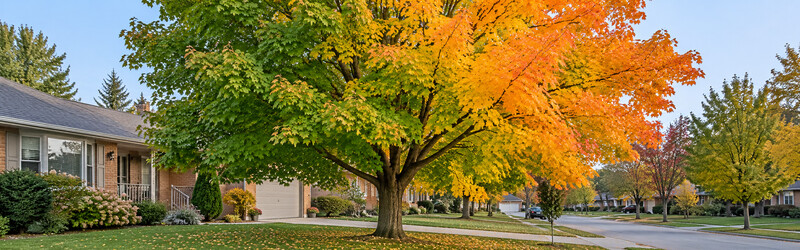
You may expect the whole canopy to change at about the same time each fall. When one side turns yellow, orange, or red while the other side stays green, part of the plant may be receiving less water, nutrients, or structural support. Root stress, branch damage, disease, insects, or different growing conditions can all cause this uneven pattern.
You should not assume that early colour means the entire plant is dying. Sunlight, drying wind, artificial light, and natural growth patterns may also affect when different sections change. However, early leaf drop, thinning foliage, dead branches, cracks, or bark damage can make the colour difference more concerning.
At Martin’s Tree Service in Kitchener-Waterloo, we assess the full canopy, trunk, branches, roots, and surrounding property before recommending any work. You should not climb, remove branches, dig around roots, or apply treatments yourself. In this blog, we explain what uneven fall colour can reveal and when you should schedule a professional tree-health assessment.
Does Early Fall Colour Mean a Tree Is Dying?
No, early fall colour does not automatically mean a tree is dying. It may show that part of the canopy is under stress, but it can also result from normal seasonal or environmental differences. The colour pattern needs to be considered with other signs.
Normal fall colour develops as daylight becomes shorter and temperatures cool. Some species and individual plants begin this process earlier than others. A section that changes weeks ahead of the rest deserves more attention, especially when nearby plants of the same type remain green.
Colour alone cannot identify the cause. Our professionals will consider the roots, trunk, branch structure, foliage, soil, growing space, and recent changes around the property. This wider assessment can show whether the difference appears harmless or requires further action.
Root and Soil Problems Can Affect One Side First
Roots supply water and nutrients to the canopy above them. Stress below one side of the ground may therefore show up in the leaves on that same side. The problem can remain hidden because most of the root system is below the surface.
- Damaged or Girdling Roots: Construction, digging, grade changes, or other property work can damage part of the root system. Girdling roots can also grow around the base and place pressure on the trunk. Both problems may reduce the movement of water and nutrients. The connected side may begin changing colour or losing leaves early.
- Uneven Soil Conditions: Soil conditions may differ from one side of the property to the other. A driveway, sidewalk, building, or busy yard area can create heat, compaction, poor drainage, or limited growing space. One section may also receive more or less water than the rest. These differences can create an uneven fall response.
- Restricted Root Space and Utilities: Underground obstacles such as footings, utility trenches, or buried debris can restrict root expansion on a single side. When roots hit these barriers, they cannot establish the depth or spread needed to support the canopy above. This localized restriction starves one side of the plant, causing premature color shifts or early leaf drop.
You should not dig around the base or remove a suspected girdling root. Cutting the wrong root can weaken the entire structure or affect its stability. A trained professional should determine whether underground stress is contributing to the colour change.
Branch, Trunk, and Vascular Damage Can Change Leaf Colour
Water and nutrients move through connected tissue inside the trunk and branches. Damage to one part can reduce support for a matching area of the canopy. The affected leaves may then change colour or fall before the rest.
- Damaged Limbs: A cracked, broken, weak, or partly detached limb may not receive normal support. Storm damage can remain hidden beneath thick summer foliage. The difference may become easier to see when fall begins. Leaves on the injured limb may change early while nearby branches remain green.
- Trunk or Vascular Injuries: Vehicle contact, lawn equipment, construction, cracks, and other damage may injure one side of the trunk. This can interrupt some of the internal pathways that move water and nutrients upward. The section above the injury may then show stress first. Bark damage or staining may appear in the same area.
- Disease or Insect Activity: Some diseases and boring insects begin in one branch or section before affecting more of the canopy. They may interfere with the tissue carrying water and nutrients. Thinning foliage, dead twigs, small holes, bark changes, or early leaf loss may appear with the colour difference. These signs require professional identification.
You should not climb, remove bark, cut into branches, or apply treatments yourself. The affected area may be weak, and the visible symptom may not reveal the complete problem. Martin’s Tree Service can determine whether professional pruning, monitoring, treatment, or removal should be considered.
Environmental Conditions May Create Uneven Colour
Different colour does not always point to damage. Two sides of the same canopy may receive different amounts of sun, wind, heat, and artificial light. These small environmental zones can change the timing and strength of fall colour.
- Sun, Wind, and Night Lighting: A sunny or wind-exposed side may experience more heat and moisture loss. This added stress can affect its leaves before those in a shaded section. Exterior lights or streetlights may also change how part of the canopy responds to shorter days. One side may remain green longer because it receives light after sunset.
- Natural Growth Differences: Some species naturally change colour in an uneven pattern. Two stems growing closely together may also have separate internal systems and slightly different seasonal schedules. What appears to be one plant may have developed from two joined stems. A professional can determine whether the pattern matches its normal structure.
- Microclimates and Nearby Structures: Reflected heat from nearby brick walls, paved surfaces, or glass windows can artificially raise temperatures on just one side of the plant. This localized microclimate accelerates the breakdown of chlorophyll on the exposed side while the opposite, sheltered side retains its normal seasonal timing.
You should not assume that an environmental difference makes the situation harmless. Sun and wind may explain the colour, but they can also add stress to an existing root or branch problem. An assessment compares the pattern with the species, structure, condition, and history of the property.

Warning Signs That Make Uneven Colour More Concerning
Uneven colour becomes more concerning when other changes appear in the same part of the canopy. These may include thinning leaves, small foliage, bare branches, dead twigs, or leaves falling weeks ahead of schedule. Several symptoms in one section can point to more than a normal seasonal difference.
A new lean, exposed roots, soil movement, hanging limbs, cavities, or cracks may suggest a structural concern. You should remain away from the area if any branch or trunk section appears unstable. Call our professional team rather than standing beneath it or trying to inspect it closely.
Martin’s Tree Service advises homeowners to take signs such as major hanging limbs, new leaning, exposed roots, and trunk cracks seriously. Damage can continue to worsen after wind, rain, or another storm. Our team can assess whether the colour change is connected to a health concern, structural weakness, or both.
Fall provides a short window when canopy differences may be easy to compare. Once the leaves drop, the colour pattern disappears even though the underlying problem may remain. Scheduling an assessment before that happens gives our team another useful clue.
Uneven Fall Colour in Kitchener-Waterloo
Fall in Kitchener-Waterloo can bring cool nights, warm afternoons, dry periods, heavy rain, and early frost. These changing conditions affect when leaves begin losing their green colour. A stressed section may respond faster than the rest of the canopy.
Urban and suburban properties also place different pressures on roots. Driveways, sidewalks, compacted yards, road salt, construction, and restricted growing space can affect one side more than the other. A nearby building may create shade while pavement raises heat on the opposite side.
Recent storms can add another layer to the problem. A limb may crack or roots may shift without causing the entire canopy to decline at once. Uneven colour can make that local damage easier to notice.
Our professional assessment can compare the visible pattern with the surrounding property. Our team looks at how soil, structures, weather exposure, and recent work may have affected the plant. Homeowners do not need to dig, climb, or cut anything to find the cause.
Tree-Health Assessments With Martin’s Tree Service
Our professional team looks beyond the coloured leaves. We assess the canopy, branches, trunk, visible root area, soil conditions, nearby structures, and signs of recent damage. This complete view helps us determine whether the pattern appears seasonal or points to a deeper concern.
We also consider the safest and most useful response. Depending on what we find, our recommendation may involve monitoring, professional pruning, treatment, or removal. We only recommend work that fits the condition and structure of the plant.
You should not climb into the canopy, cut affected limbs, dig around roots, remove bark, or apply treatments yourself. Large branches and damaged sections can behave in unexpected ways. Our trained team has the equipment and experience to complete the assessment and any required work safely.
At Martin’s Tree Service, we provide professional pruning, maintenance, and removal services across Kitchener-Waterloo and nearby communities. We can assess the uneven colour while the pattern remains visible and explain what it may mean for the long-term health of your property.
Frequently Asked Questions
Is uneven fall colour always a sign of disease?
No, disease is only one possible cause. Root stress, branch damage, insects, soil conditions, sunlight, wind, and natural growth patterns may also affect colour. The pattern must be compared with the plant’s species and overall condition. A professional assessment can narrow down the cause.
Why is one branch changing colour before the others?
The branch may have reduced water or nutrient flow. Damage, disease, insects, or an issue farther down the connected vascular path may be involved. A branch can also receive different light or wind exposure from the rest of the canopy. Colour alone cannot confirm which explanation applies.
Can a stressed tree recover from early colour change?
Recovery depends on the cause, severity, species, age, and overall health. A mild environmental difference may not require major work, while root or structural damage may need closer attention. Some conditions can be managed through professional care. Others may require monitoring or removal if safety becomes a concern.
Should a branch with early colour be removed?
No decision should be based on leaf colour alone. The branch may still be structurally sound, or the actual cause may begin in the trunk or roots. Improper cutting can create a larger wound and add more stress. Our professionals will assess the branch before pruning is considered.
Will the colour difference return next year?
It may return if the same root, soil, structural, or environmental condition remains. A repeating pattern can provide useful information about which part of the canopy is affected. However, the timing and colour may change with yearly weather. Professional records and monitoring can help track whether the condition is getting worse.
Do Not Let the Leaves Hide the Warning
Uneven fall colour may reflect a harmless difference in light or seasonal timing, but it can also show that one part of the canopy is under stress. The colour change becomes more important when it appears early or occurs with thinning foliage, dead branches, cracks, bark damage, or early leaf drop. You should not rely on colour alone to decide whether the plant is healthy.
Timing matters because the visible pattern will disappear after the leaves fall. The underlying root, branch, trunk, or soil concern may remain through winter. A professional assessment while the colour is still present provides more information about which section is affected and how serious the change may be.
At Martin’s Tree Service in Kitchener-Waterloo, we assess the entire structure and surrounding growing conditions before recommending the next step. Our team can determine whether professional pruning, monitoring, treatment, or removal should be considered. You do not need to climb, cut, dig, or investigate the problem yourself. Schedule a professional tree-health assessment before the leaves disappear, or request an estimate to learn more.
Steve Martin